


Description
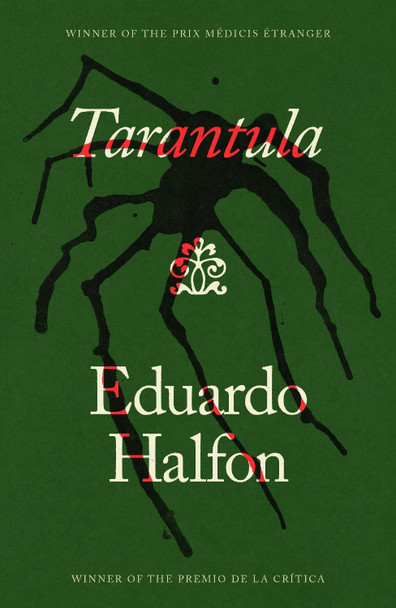
Winner of the Prix Medicis Etranger in France and the Premio de la Critica in Spain
Conversation-starting and prize-winning international fiction: an extraordinary meditation on violence, conspiracy and the many complex afterlives of the Holocaust
'Audacious' Observer
'Provocative' Times Literary Supplement
'Extraordinary' Olivia Laing
Eduardo and his brother have been living in the US for three years when their parents send them back to Guatemala for the holidays. It is 1984 and their native country, in the midst of a violent civil war, feels newly alien to them - their Spanish faltering, already half-forgotten. Their grandfather collects the boys from the airport and drives them into the mountains, depositing them at what they're told is a Jewish summer camp.
At the camp, the children meet a counsellor called Samuel Blum: a handsome young man with sky-blue eyes who knows about all kinds of things. He shows them how to make a survival shelter out of branches and leaves, and how to kindle a fire using a glass bottle. He sings songs with them and plays games. But he also trains them to march in rank, and salute, and dive for cover. He teaches them the Hebrew words for 'grenade' and 'soldier' and 'silence'.
On the fourth day, everything changes. The boys are shaken from their beds at dawn. A terrifying figure, uniformed in black, looms over them, and beyond him is the sound of screaming outside. Eduardo looks into the stranger's face - it is Samuel Blum, but his sky-blue eyes look different now. In his hand he carries a club. Crawling down his left arm is a huge tarantula.
Thought-provoking and powerfully ambivalent, Tarantula is an extraordinary meditation on the many complex afterlives of the Holocaust. It is a novel about individual and collective inheritance, individual and collective violence; about memory, trauma, connection and estrangement. It asks what it means to be a Jew in the long wake of the twentieth century, and how the past lives on in the present.
About the Author
Eduardo Halfon (Author)
Eduardo Halfon is one of the great global writers of his generation. He is the author of fifteen novels examining questions of identity, memory and history as a Jewish man, as a Guatemalan, as a descendant of European and Middle Eastern refugees, including The Polish Boxer, Mourning and Cancion . He has received international literary awards including the Prix Medicis Etranger, the Prix Roger Caillois and the Prix du Meilleur Livre Etranger in France, the Premio de la Critica and the Premio Jose Maria de Pereda in Spain, the Edward Lewis Wallant Award and the International Latino Book Award in the US, and the National Prize in Literature of Guatemala, his country's highest literary honour. Eduardo Halfon was named one of the thirty-nine most promising young Latin American writers by the Hay Festival in Bogota and is a Fellow of the Guggenheim Foundation. His work has been translated into sixteen languages. Tarantula is his latest novel.
Daniel Hahn (Translator)
Daniel Hahn is a writer, editor and literary translator. He translates from Portuguese, Spanish and French and has translated literature from Europe, Africa and the Americas, including the work of Jose Eduardo Agualusa, Philippe Claudel, Maria Duenas, Eduardo Halfon, Jose Luis Peixoto, Jose Saramago and Goncalo M. Tavares. His translations have won literary awards including the Independent Foreign Fiction Prize and the International Dublin Literary Award, and been shortlisted for the Man Booker International Prize and the LA Times Book Award. He is also the author of several works of non-fiction, including The Tower Menagerie and the forthcoming If This Be Magic, and the award-winning children's picture-book Happiness is a Watermelon on Your Head, and is co-editor of 'The Ultimate Book Guide' series. He reviews for publications including the Guardian, Spectator and Prospect, and is former Chair of the Translators Association and the Society of Authors and former National Programme Director of the British Centre for Literary Translation.
Reviews
Visceral, playful, overpowering... The juxtaposition of a children's summer camp and scenes that recall the darkest horrors of the 20th century makes for a novel that tickles the brain and chills the heart at the same time... [It] will be hard for any reader to forget * The Times *
An extraordinary book. What begins as a shocking story reveals itself as a sidelong, mysterious meditation on trauma, vengeance and the terrible capacity of the past to shape the present -- Olivia Laing
Audacious... Halfon's primary concern seems to be to rappel as deeply as possible into those crevasses where meaning and truth disappear... A short, dense puzzle of a book * Observer *
Incisive, troubling, provocative * Times Literary Supplement *
This novel about a violent and traumatic childhood episode is eerily current - the questions it raises about identity, resistance and history are both deeply personal and universal -- Mariana Enriquez
Impressionistic, very well-realised... We get a real sense of why, for [some] people, the Holocaust did not instil a feeling of compassion for the wretched of the Earth and instead created a determination that such degradation would never again be visited upon Jewish people. But at what cost? * Irish Times *
Resonant, dreamlike, disturbing... It's a breath of fresh air * Publishers Weekly *
Chilling. A story set in the Guatemalan jungle that resonates in Gaza, in Donbas, anywhere victims end up resembling their own executioners -- Santiago Roncagliolo
One of the great global writers of his generation * Service95, 'The 21 Must-Read Books To Have On Your Radar In 2026' *
This taut, magisterial novel explores the possibility of disentangling one's trauma and one's roots * Le Monde des Livres (France) *
Book Information
ISBN 9781405986762
Author Eduardo Halfon
Format Paperback
Page Count 192
Imprint Penguin Books Ltd
Publisher Penguin Books Ltd
Weight(grams) 165g
Dimensions(mm) 197mm * 130mm * 13mm


