


Description
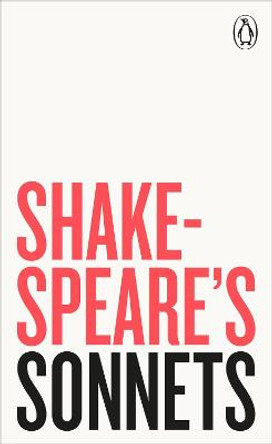
Love sonnets are for romantics, starry-eyed lovers and ardent hearts. And Shakespeare's sonnets are the best ever written. But this is why they are also for cynics, for star-crossed lovers and for those who know the anguish of unrequited love.
Some appear to be written to a young man, some to a woman. And although the poems are full of mystery - why did Shakespeare write them, and to whom? - each one speaks to us from across the centuries of love, hate and the intensity of being alive.
INTRODUCED BY ANDREW McMILLAN
'This is a crazy, all-consuming, feverish and sweaty love; love, in all its uncut, full-strength intensity; an adolescent love' Don Paterson, Guardian
About the Author
William Shakespeare (Author)
William Shakespeare was born in Stratford-upon-Avon in Warwickshire, and was baptised on 26 April 1564. His father was a glove maker and wool merchant and his mother, Mary Arden, was the daughter of a well-to-do local land owner. Shakespeare was probably educated in Stratford's grammar school. In 1582 he married Anne Hathaway, and the couple had a daughter the following year and twins in 1585.
Shakespeare's theatrical life seems to have commenced around 1590. We do know that he was part of the Lord Chamberlain's Company, which was renamed the King's Company in 1603 when James I succeeded to the throne. The Company acquired interests in two theatres in the Southwark area of London, near the banks of the Thames - the Globe and the Blackfriars.
Shakespeare's poetry was published before his plays, with two poems appearing in 1593 and 1594, dedicated to his patron Henry Wriothesley, Earl of Southampton. Most of Shakespeare's sonnets were probably written at this time as well.
Records of Shakespeare's plays begin to appear in 1594, and he produced roughly two a year until around 1611. His earliest plays include Henry VI and Titus Andronicus. A Midsummer Night's Dream, The Merchant of Venice and Richard II all date from the mid to late 1590s. Some of his most famous tragedies were written in the early 1600s; these include Hamlet, Othello, King Lear, Macbeth and Antony & Cleopatra. His late plays, often known as the Romances, date from 1608 onwards and include The Tempest.
Shakespeare died on 23 April 1616 and was buried in Holy Trinity Church in Stratford. The first collected edition of his works was published in 1623 and is known as 'the First Folio'.
Andrew McMillan (Introducer)
Andrew McMillan is the author of three poetry collections, a novel and the co-editor of the anthology 100 Queer Poems. His work has been widely translated across Europe, and has won the Guardian First Book Award, the only poetry collection to ever do so, as well as a Somerset Maugham Award, an Eric Gregory Award, the Polari Prize and a Northern Writers' Award, amongst others. He has been shortlisted for the Dylan Thomas Prize, The Forward Prizes and the Sunday Times Young Writer of the Year. He is Professor of Contemporary Writing at Manchester Metropolitan University and a fellow of the Royal Society of Literature. He was appointed an MBE for Services to Literature in 2026. A fourth collection, partings, will be published in February 2027.
Reviews
The great master who knew everything...an unspeakable source of delight-Charles Dickens
Every age has reinvented the Bard in its own image. Renaissance Man or post-modern angst... Shakespeare haunts our language-Independent
Shakespeare was the most consummate genius of all time-Peter Ackroyd
Dante and Shakespeare divide the modern world between them, there is no third-T.S. Eliot
Every single character in Shakespeare is as much an Individual as those in Life itself-Alexander Pope
Shakespeare is the best thing that ever happened to this country-Roy Hattersley
Shakespeare modernised the form of the sonnet, and transformed it from a stylised, courtly love shtick to a fluent and flexible form that could turn itself to any subject-Don Paterson, Guardian
Book Information
ISBN 9781784878238
Author William Shakespeare
Format Paperback
Page Count 176
Imprint Vintage Classics
Publisher Vintage Publishing
Weight(grams) 140g
Dimensions(mm) 176mm * 130mm * 13mm