

Description
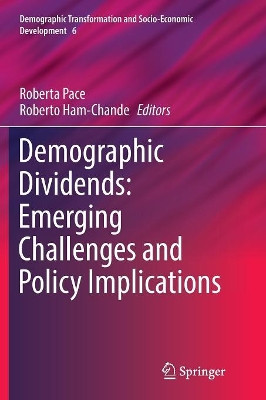
This book examines potential economic opportunities that countries can experience when fertility rates fall and the average life expectancy of the working age population increases. It presents detailed demographic and economic analysis of middle-income countries throughout the world in order to show how these countries can take advantage of this demographic bonus.
The book first traces the common link between policies that contribute to fertility transition as well as create the right kind of environment for reaping the benefit of demographic dividend. Next, it explores different countries and regions who are at different levels of development. It assesses the long term impact of gender equality on economic growth and development in Latin America; describes the life-cycle saving patterns of Mexican households; and examines demographic determinants of economic growth in BRICS. The book also offers demographic and economic analysis of the Mediterranean area, Sub-Saharan Africa, and New Zealand.
The comparison between the different territorial contexts allow for the identification of three typologies of demographic dividend: the first dividend, when the working population grows faster than total population, the second dividend, as active generations get older and invest their savings in the production system of their country, and the third dividend, based on the coexistence of two populations age structure strongly contrasting.
Overall, this book argues for the need to capitalize on the opportunities that come from the demographic dividend by investing heavily in education programs, training programs for the population working age, health programs, the creation of health insurance systems as well as programs to reduce or increase fertility levels.
Book Information
ISBN 9783319813509
Author Roberta Pace
Format Paperback
Page Count 184
Imprint Springer International Publishing AG
Publisher Springer International Publishing AG
The book first traces the common link between policies that contribute to fertility transition as well as create the right kind of environment for reaping the benefit of demographic dividend. Next, it explores different countries and regions who are at different levels of development. It assesses the long term impact of gender equality on economic growth and development in Latin America; describes the life-cycle saving patterns of Mexican households; and examines demographic determinants of economic growth in BRICS. The book also offers demographic and economic analysis of the Mediterranean area, Sub-Saharan Africa, and New Zealand.
The comparison between the different territorial contexts allow for the identification of three typologies of demographic dividend: the first dividend, when the working population grows faster than total population, the second dividend, as active generations get older and invest their savings in the production system of their country, and the third dividend, based on the coexistence of two populations age structure strongly contrasting.
Overall, this book argues for the need to capitalize on the opportunities that come from the demographic dividend by investing heavily in education programs, training programs for the population working age, health programs, the creation of health insurance systems as well as programs to reduce or increase fertility levels.
Book Information
ISBN 9783319813509
Author Roberta Pace
Format Paperback
Page Count 184
Imprint Springer International Publishing AG
Publisher Springer International Publishing AG