

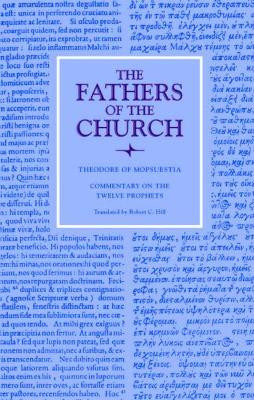

Description
Friend of John Chrysostom and pupil of Diodore of Tarsus, the founder of the method of exegesis practiced in Antioch, Theodore was appointed bishop of Mopsuestia in Cilicia in 392. His pedigree thus seems impeccable, as was his early reputation as a commentator on the Bible, which earned him the sobriquet ""The Interpreter."" More than one modern scholar has been prepared to class Theodore as ""the foremost exponent of Antiochene exegesis."" Yet not long after his death in 428--coincidentally, but significantly, the year Nestorius acceded to the see of Constantinople--Theodore became the object of intemperate criticism by the likes of Cyril of Alexandria for his Christological views. His works were condemned by the fifth ecumenical council of 553, and only the Commentary on the Twelve Prophets, here appearing in English for the first time, survives entirely in Greek.
Does Theodore deserve either or both of these extreme assessments? Why did his adversaries allow this one work to survive the flames untouched? Is it because, as has been said in facile repetition, ""it contains nothing of Christological import""? The truth emerging from a reading of the Commentary is that both views are wide of the mark. Theodore does not entertain a Christological interpretation of verse after verse in the manner of his Alexandrian contemporary Didymus, but he situates these twelve prophetic figures from the eighth to the sixth century of Israel's history within an overall Christological perspective. True to his school's accent on historia, however, he prefers to look for a factual basis to their prophecy (a problem in the case of Jonah), is less sensitive to the moving imagery of a Hosea or a Micah than modern readers would appreciate, and is unfamiliar with the genre of apocalyptic, which appears especially in Joel and Zechariah. Theodoret of Cyrus in the decades after Theodore's death had his works open before him as he commented on prophets, just as modern commentators will also appreciate his work.
About the Author
Robert C. Hill is retired from the faculties at the University of Sydney and the Australian Catholic University and continues to serve as an adjunct professor at the Australian Catholic University. He has translated many volumes in the Fathers of the Church Series, particularly those of the Old Testament commentaries of the Antioch Fathers, including John Chrysostom's Commentary on Genesis and Theodoret's Commentary on the Psalms. His translations of the Psalms commentaries of Theodore and Diodore are forthcoming.
Book Information
ISBN 9780813226439
Author Theodore of Mopsuestia
Format Paperback
Page Count 435
Imprint The Catholic University of America Press
Publisher The Catholic University of America Press
Weight(grams) 333g
Does Theodore deserve either or both of these extreme assessments? Why did his adversaries allow this one work to survive the flames untouched? Is it because, as has been said in facile repetition, ""it contains nothing of Christological import""? The truth emerging from a reading of the Commentary is that both views are wide of the mark. Theodore does not entertain a Christological interpretation of verse after verse in the manner of his Alexandrian contemporary Didymus, but he situates these twelve prophetic figures from the eighth to the sixth century of Israel's history within an overall Christological perspective. True to his school's accent on historia, however, he prefers to look for a factual basis to their prophecy (a problem in the case of Jonah), is less sensitive to the moving imagery of a Hosea or a Micah than modern readers would appreciate, and is unfamiliar with the genre of apocalyptic, which appears especially in Joel and Zechariah. Theodoret of Cyrus in the decades after Theodore's death had his works open before him as he commented on prophets, just as modern commentators will also appreciate his work.
About the Author
Robert C. Hill is retired from the faculties at the University of Sydney and the Australian Catholic University and continues to serve as an adjunct professor at the Australian Catholic University. He has translated many volumes in the Fathers of the Church Series, particularly those of the Old Testament commentaries of the Antioch Fathers, including John Chrysostom's Commentary on Genesis and Theodoret's Commentary on the Psalms. His translations of the Psalms commentaries of Theodore and Diodore are forthcoming.
Book Information
ISBN 9780813226439
Author Theodore of Mopsuestia
Format Paperback
Page Count 435
Imprint The Catholic University of America Press
Publisher The Catholic University of America Press
Weight(grams) 333g


