
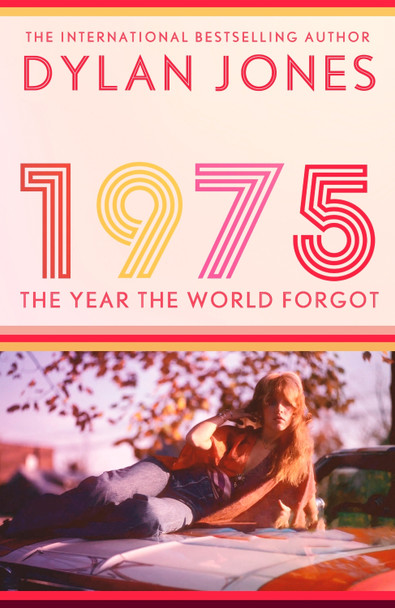

Description
There is a myth that the long, dark days before punk were full of legions of British prog rock groups; that the likes of Yes, Genesis, King Crimson, Emerson Lake & Palmer and Jethro Tull roamed the land, soiling the culture like university-educated Orcs.
Wrong.
The mid-seventies were dense with extraordinarily sophisticated, mature rock music made by singers, songwriters and musicians who had no problem calling themselves artists. And the records they made aspired to artistic status: everyone was trying to make their own masterpiece, and the sense of competitiveness was like something not seen since the mid-sixties. Three-minute pop singles had given way to concept albums and pop-package tours had been supplanted by rock festivals, and rock in general had a renewed sense of ambition.
1975 was the apotheosis of the adult pop, the most important year in the narrative arc of post-war music, and a year that was rich with masterpieces: Blood on the Tracks by Bob Dylan, The Who by Numbers by the Who, Young Americans by David Bowie, Another Green World by Brian Eno, The Hissing of Summer Lawns by Joni Mitchell and A Night at the Opera by Queen, amongst countless other legendary albums.
These records were magisterial; records that couldn't be bettered. Who could realistically make a more sophisticated album than The Hissing of Summer Lawns? Or a more complex hard-rock album than Physical Graffiti? Or indeed a record as unimpeachable and as prescient as Horses?
1975, as Dylan Jones expertly illustrates, was the greatest year of them all.
About the Author
New York Times and Sunday Times bestselling author Dylan Jones has written or edited over thirty books. In the eighties, he was one of the first editors of i-D, before becoming a contributing editor of The Face and editor of Arena. He spent the next decade working in newspapers - principally the Observer and the Sunday Times - before embarking on a multi-award-winning tenure at GQ. During his editorship, Conde Nast's flagship magazine won more awards than any other title. A former columnist for the Guardian, Independent and Mail On Sunday, he is a Hay Festival Advisor and an independent BBC television producer. In 2012 he was awarded an OBE for services to publishing. He was the editor-in-chief of the Evening Standard from 2023 to 2025
Reviews
Whether he's unpicking the importance of 'Born to Run' to Bruce Springsteen's career, explaining how Donna Summer invented the 12" single, or describing the impact of Bob Marley's appearance at the Lyceum in July 1975, Jones' writing is witty, precise, and engaging . . . Readers will want to revisit many of the records that Jones uses to build his convincing case for 1975 being the apotheosis of adult pop. The book successfully challenges the accepted history of what came before punk's 'day zero' and shines a light on some lost gems * Louder Than War *
[Jones's] makes deliciously bold statements and the breadth and scope of his coverage is impressive, as is his eye for detail. Makes one crave a follow-up undertaking for 1976! * Record Collector *
Enormously entertaining . . . Jones pulls all these cultural fragments into one gloriously exciting picture in a way only he can. Never has pop history been so elegantly told * London Standard *
Indefatigable polemicist rescues classic rock from year zero barbarians * MOJO *
Across 21 albums, Jones smartly covers the songs and music as well as the geo-cultural milieu that nurtured and enveloped them. An excellent book * Irish Times *
Book Information
ISBN 9781408721988
Author Dylan Jones
Format Hardback
Page Count 368
Imprint Constable
Publisher Little, Brown Book Group
Weight(grams) 689g
Dimensions(mm) 236mm * 162mm * 44mm