


Description
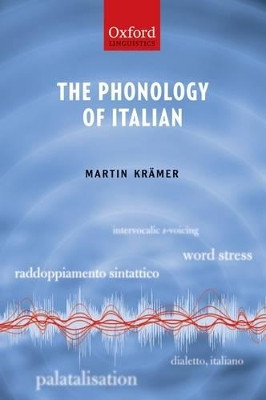
At the heart of generative phonology lies the assumption that the sounds of every language have abstract underlying representations, which undergo various changes in order to generate the 'surface' representations; that is, the sounds we actually pronounce. The existence, status and form of underlying representations have been hotly debated in phonological research since the introduction of the phoneme in the nineteenth century. This book provides a comprehensive overview of theories of the mental representation of the sounds of language. How does the mind store and process phonological representations? Kramer surveys the development of the concept of underlying representation over the last 100 years or so within the field of generative phonology. He considers phonological patterns, psycholinguistic experiments, statistical generalisations over data corpora and phenomena such as hypercorrection. The book offers a new understanding of contrastive features and proposes a modification of the optimality-theoretic approach to the generation of underlying representations.
A comprehensive overview of theories of the mental representation of the sounds of language.
About the Author
Martin Kramer is Associate Professor in Linguistics in the Department of Language and Linguistics at the University of Tromso.
Reviews
'A timely and timeless topic ripe for in-depth investigation, with important and fundamental implications for rule- and constraint-based theories alike. A book that every theoretical phonologist should read and debate.' Bert Vaux, University of Cambridge
'... this thought-provoking book amasses a vast range of evidence for and against different theories, proposals and hypotheses, and is an excellent guide to previous studies as well as to outstanding research problems.' Stig Eliasson, Journal of Linguistics
Book Information
ISBN 9780521180030
Author Martin Kramer
Format Paperback
Page Count 276
Imprint Cambridge University Press
Publisher Cambridge University Press
Weight(grams) 380g
Dimensions(mm) 216mm * 138mm * 13mm
A comprehensive overview of theories of the mental representation of the sounds of language.
About the Author
Martin Kramer is Associate Professor in Linguistics in the Department of Language and Linguistics at the University of Tromso.
Reviews
'A timely and timeless topic ripe for in-depth investigation, with important and fundamental implications for rule- and constraint-based theories alike. A book that every theoretical phonologist should read and debate.' Bert Vaux, University of Cambridge
'... this thought-provoking book amasses a vast range of evidence for and against different theories, proposals and hypotheses, and is an excellent guide to previous studies as well as to outstanding research problems.' Stig Eliasson, Journal of Linguistics
Book Information
ISBN 9780521180030
Author Martin Kramer
Format Paperback
Page Count 276
Imprint Cambridge University Press
Publisher Cambridge University Press
Weight(grams) 380g
Dimensions(mm) 216mm * 138mm * 13mm