

Description
When manufacturers and retailers vacate traditional locations, they leave holes in a city's fabric that signal a shifting urban-industrial terrain. Who should mend these spaces, and how should they approach the problem?
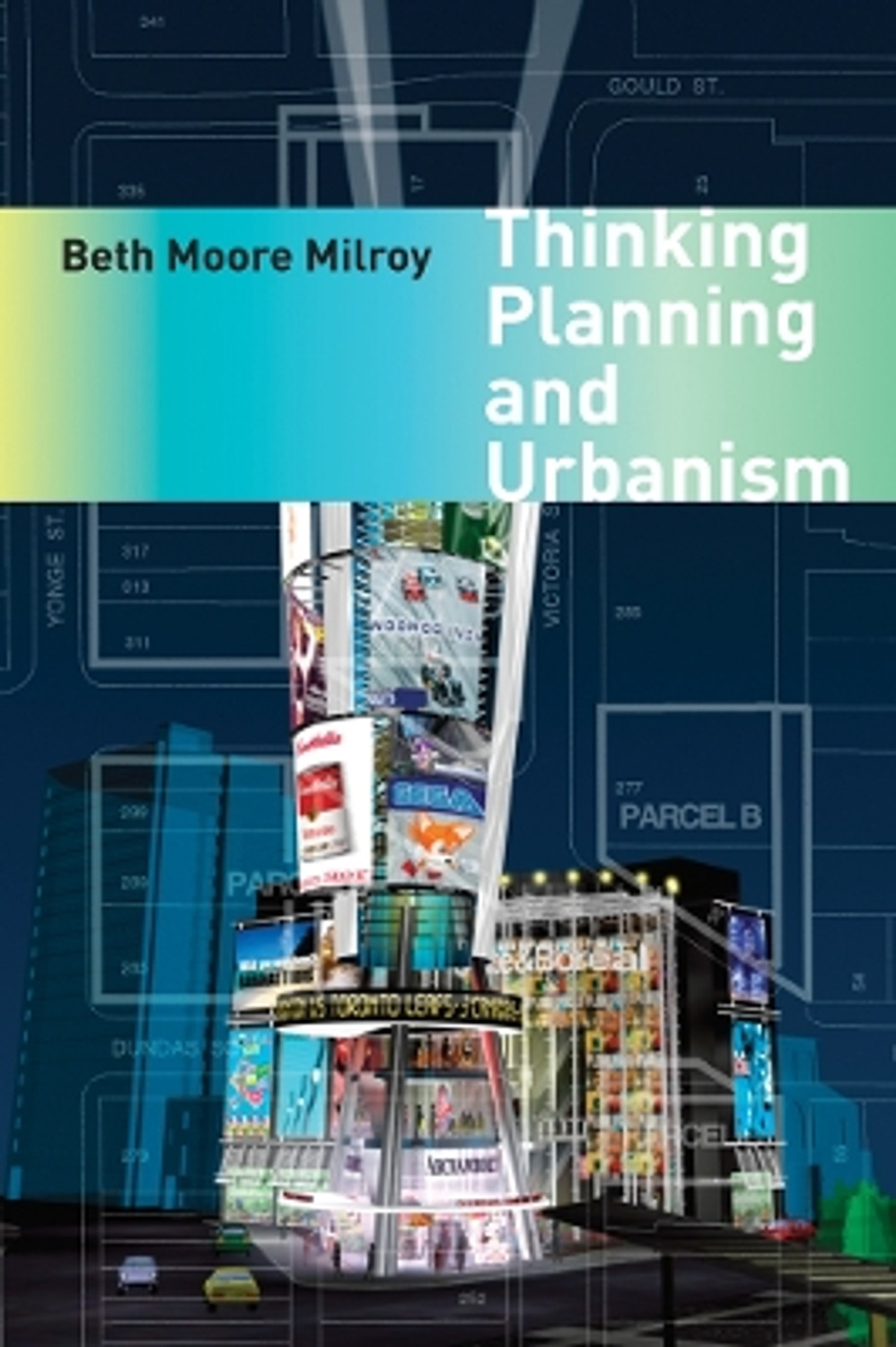
Using Toronto's Dundas Square and surrounding area as a case study, Thinking Planning and Urbanism meticulously reconstructs the redevelopment process to explore the theories and practices used. It traces the labyrinth of competing interests that can sideline and nearly overwhelm the public planning function. In these circumstances, Moore Milroy concludes, practising planners are marooned by planning theories that begin from the premise that urban space is a social construction and only secondarily a function of technology and aesthetics.
This book makes plain the nature of the gap between the practice of planning and its theories, a gap that inhibits planners from effectively championing creative actions to deal with postindustrial problems. The findings drawn from this case will be widely recognized in redevelopment elsewhere and thus will be extremely useful to students and practitioners of urban design, public administration, municipal law, and urban and regional planning.
By exposing the details of one redevelopment - the Dundas Square area in Toronto - this book shows how city planners can be overwhelmed by the machinations of money and power, but also why the planning field itself is ill-equipped to answer the challenge of finding creative solutions for post-industrial problems.
About the Author
Beth Moore Milroy, professor emerita, is former director of the School of Urban and Regional Planning at Ryerson University and a Fellow of the Canadian Institute of Planners.
Book Information
ISBN 9780774816144
Author Beth Moore Milroy
Format Hardback
Page Count 336
Imprint University of British Columbia Press
Publisher University of British Columbia Press
Weight(grams) 660g