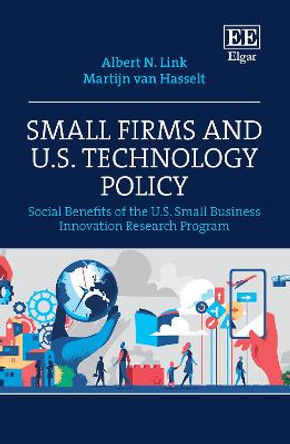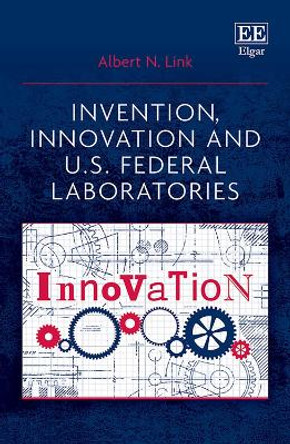


Description
Exploring prominent Institutes within the NIH and using data from the SBIR program, they discuss innovation and social benefits associated with the NIH's Institutes and Centers. Topics covered include commercialization success, patenting activities of firms, and correlations between diversity measures and various performance metrics. Ultimately, the book delineates the success of the firms that receive awards from the SBIR, and these firms' abilities to support technological development.
Small Business Innovation in the Public Interest is an invaluable resource for academics, researchers and students across health policy and economics, entrepreneurship, biotechnology and innovation. Policymakers working in the health industry will also find the insights into innovation funding beneficial.
About the Author
Albert N. Link, Professor Emeritus and former Virginia Batte Phillips Distinguished Professor of Economics, University of North Carolina at Greensboro and Alan C. O'Connor, Senior Director, Center for Applied Economics and Strategy, RTI International, USA
Reviews
'The SBIR program has been one of the major underpinnings of the transition of the U.S. economy from a manufacturing base to an innovation base over the past fifty years, but has never received the recognition that it so richly deserves. In this book, two long term researchers on innovation in the U.S., Albert N. Link and Alan C. O'Connor, document the history of the U.S.'s support for small businesses, the history of the NIH and its SBIR and STTR programs. They then carry out a quantitative analysis of the programs' effectiveness and enormous impact. The book is well written, succinct and richly illustrated with tables and figures.' -- Ashley J. Stevens, Focus IP Group, USA
'Link and O'Connor make an important contribution to the analysis of NIH SBIR and STTR programs by drilling down to data at the level of the many NIH Institutes and Centers, where awards are actually made, rather than generalizing about NIH as a whole. This approach is warranted as NIH Institutes and Centers have particular research agendas, most based on particular organs or diseases. Link and O'Connor show clearly that correlations of inputs and outputs of SBIR/STTR awards - prior funding, number of employees, participation of women and minorities, applied and awarded patents, partnering, and commercialization - provide valuable insights that are lacking in, and at times contrary to, an NIH-wide approach. With the limited data available, the authors demonstrate how the public availability of more data would permit further evaluation of the degree of alignment of SBIR/STTR programs with the statutory goals of the implementing legislation. Anyone interested in the evaluation of SBIR/STTR programs should read this book.' -- Mark L. Rohrbaugh, former Senior Advisor for Technology Transfer, National Institutes of Health, USA
'This book offers an historical appraisal of the public policy emphasis on small innovative firms using as an illustration the SBIR program at the National Cancer Institute and the National Heart, Lung, and Blood Institute of the U.S. National Institutes of Health. The authors do an excellent job in blending the evolution of socioeconomic arguments and firm-level survey evidence of the outcomes of SBIR support. A fresh and super interesting read for students of science and technology policy evaluation.' -- Nicholas Vonortas, George Washington University, USA
Book Information
ISBN 9781035330164
Author Albert N. Link
Format Hardback
Page Count 172
Imprint Edward Elgar Publishing Ltd
Publisher Edward Elgar Publishing Ltd