

Description
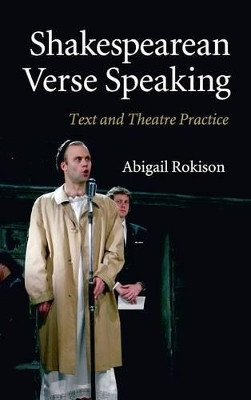
This book uses evidence from theatrical hand-books, performance practice and drama training to provide a synthesis of academic and theatrical approaches to the Shakespearean text. Abigail Rokison's work combines scholarship with practical exploration in the rehearsal room. In looking at theatrical interaction with early printed and modern edited texts, Rokison investigates the potential impact of editorial principles of lineation and punctuation on theatrical delivery. The book alerts editors to ways in which actors may interpret editorial emendations, and theatre practitioners to diverse authorial, editorial and compositional methods. It contains suggestions for a 'theatrical text' which makes clear the metrical structure of a scene whilst also indicating areas of ambiguous lineation. Providing a fresh perspective on Renaissance actors' parts, the book includes detailed analysis of the structural properties of the verse, in particular short lines, shared lines, end-stopping and enjambment in a range of Shakespearean texts.
Uses evidence from theatrical hand-books, performance practice and drama training to examine academic and theatrical approaches to the Shakespearean text.
Reviews
"Abigail Rokison's work is both fascinating and revelatory. It makes me hungry and impatient to return to Shakespeare armed with new insight and fresh inspiration. ... As an actor what Rokison has to say is both helpful and inspiring. Everyone tackling Shakespeare in the rehearsal room needs to look at this. ... There is so much received opinion spouted at actors in the name of Shakespeare. This work helps to puncture some of the more puffed up pomposities and give actors a fresh insight into their craft." -David Tennant
Awards
Winner of Shakespeare's Globe Book Award 2012.
Book Information
ISBN 9781107404038
Author Abigail Rokison
Format Paperback
Page Count 250
Imprint Cambridge University Press
Publisher Cambridge University Press
Weight(grams) 340g
Dimensions(mm) 229mm * 152mm * 13mm
Uses evidence from theatrical hand-books, performance practice and drama training to examine academic and theatrical approaches to the Shakespearean text.
Reviews
"Abigail Rokison's work is both fascinating and revelatory. It makes me hungry and impatient to return to Shakespeare armed with new insight and fresh inspiration. ... As an actor what Rokison has to say is both helpful and inspiring. Everyone tackling Shakespeare in the rehearsal room needs to look at this. ... There is so much received opinion spouted at actors in the name of Shakespeare. This work helps to puncture some of the more puffed up pomposities and give actors a fresh insight into their craft." -David Tennant
Awards
Winner of Shakespeare's Globe Book Award 2012.
Book Information
ISBN 9781107404038
Author Abigail Rokison
Format Paperback
Page Count 250
Imprint Cambridge University Press
Publisher Cambridge University Press
Weight(grams) 340g
Dimensions(mm) 229mm * 152mm * 13mm