

Description
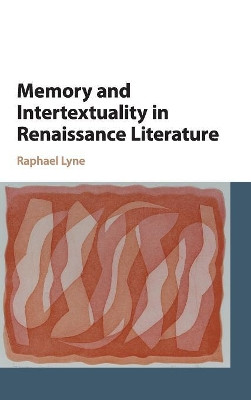
Raphael Lyne addresses a crucial Shakespearean question: why do characters in the grip of emotional crises deliver such extraordinarily beautiful and ambitious speeches? How do they manage to be so inventive when they are perplexed? Their dense, complex, articulate speeches at intensely dramatic moments are often seen as psychological - they uncover and investigate inwardness, character and motivation - and as rhetorical - they involve heightened language, deploying recognisable techniques. Focusing on A Midsummer Night's Dream, Othello, Cymbeline and the Sonnets, Lyne explores both the psychological and rhetorical elements of Shakespeare's language. In the light of cognitive linguistics and cognitive literary theory he shows how Renaissance rhetoric could be considered a kind of cognitive science, an attempt to map out the patterns of thinking. His study reveals how Shakespeare's metaphors and similes work to think, interpret and resolve, and how their struggle to do so results in extraordinary poetry.
Lyne addresses a crucial Shakespearean question: why do characters in the grip of emotional crises deliver such extraordinarily beautiful speeches?
About the Author
Raphael Lyne is a Senior Lecturer at the University of Cambridge and a Fellow of Murray Edwards College. He is the author of Ovid's Changing Worlds: English Metamorphoses, 1567-1632 (2001) and Shakespeare's Late Work (2007), as well as the editor (with Subha Mukherji) of Early Modern Tragicomedy (2007).
Reviews
'Sections of this book work very well as thoughtful close readings of the way Shakespeare uses language to present his characters' thought in action and Lyne's central argument is surely right.' Peter Mack, The Review of English Studies
Book Information
ISBN 9781107417144
Author Raphael Lyne
Format Paperback
Page Count 276
Imprint Cambridge University Press
Publisher Cambridge University Press
Weight(grams) 370g
Dimensions(mm) 229mm * 152mm * 15mm
Lyne addresses a crucial Shakespearean question: why do characters in the grip of emotional crises deliver such extraordinarily beautiful speeches?
About the Author
Raphael Lyne is a Senior Lecturer at the University of Cambridge and a Fellow of Murray Edwards College. He is the author of Ovid's Changing Worlds: English Metamorphoses, 1567-1632 (2001) and Shakespeare's Late Work (2007), as well as the editor (with Subha Mukherji) of Early Modern Tragicomedy (2007).
Reviews
'Sections of this book work very well as thoughtful close readings of the way Shakespeare uses language to present his characters' thought in action and Lyne's central argument is surely right.' Peter Mack, The Review of English Studies
Book Information
ISBN 9781107417144
Author Raphael Lyne
Format Paperback
Page Count 276
Imprint Cambridge University Press
Publisher Cambridge University Press
Weight(grams) 370g
Dimensions(mm) 229mm * 152mm * 15mm