


Description
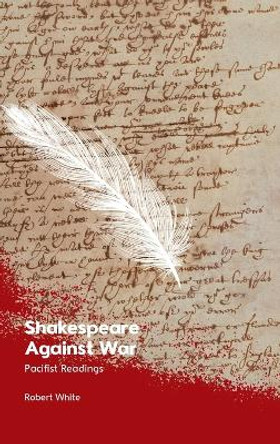
Whilst Shakespearean drama provides eloquent calls to war, more often than not these are undercut or outweighed by compelling appeals to peaceful alternatives conveyed through narrative structure, dramatic context and poetic utterance. Placing Shakespeare's works in the history of pacifist thought, Robert White argues that Shakespeare's plays consistently challenge appeals to heroism and revenge and reveal the brutal futility of war. White also examines Shakespeare's interest in the mental states of military officers when their ingrained training is tested in love relationships. In imagery and themes, war infiltrates love, with problematical consequences, reflected in Shakespeare's comedies, histories and tragedies alike. Challenging a critical orthodoxy that military engagement in war is an inevitable and necessary condition, White draws analogies with the experience of modern warfare, showing the continuing relevance of Shakespeare's plays which deal with basic issues of war and peace that are still evident.
About the Author
Robert White FAHA is Emeritus Winthrop Professor of English at the University of Western Australia and a Chief Investigator in the Australian Research Council Centre of Excellence in the History of Emotions 1100-1800. He has held a Fellowship at the Humanities Research Centre, ANU, an Australian Research Council Professorial Fellowship, and recently the Senior Visiting Research Fellowship at Magdalen College, Oxford. His publications are mainly in the field of early modern literature, especially Shakespeare, and also Romantic literature. Monographs include Keats's Anatomy of Melancholy (Edinburgh University Press, 2020); John Keats: A Literary Life (Palgrave Macmillan, 2010, revised ed. 2012); Pacifism in English Literature: Minstrels of Peace (Palgrave Macmillan, 2008); Natural Rights and the Birth of Romanticism in the 1790s (Palgrave Macmillan, 2005); and Natural Law in English Renaissance Literature (Cambridge University Press, 1996). Others include Avant-Garde Hamlet (Fairleigh Dickinson University Press, 2015); Shakespeare's Cinema of Love (Manchester University Press, 2016); Ambivalent Macbeth (Sydney University Press, 2018); and A Midsummer Night's Dream: Language and Writing (Bloomsbury Arden Study, 2020).
Reviews
One of the book's main strengths is the way it combines its analysis of Shakespeare's texts with a consideration of their continuing relevance to contemporary political disputes and military conflicts. [...] This presentist approach underscores the book's timeliness and significance. [...] Shakespeare Against War is a thought-provoking study that puts forward a convincing argument for an urgent rethinking of our attitudes to war and its representations in literature and culture. -- Monika Smialkowska, Northumbria University * Shakespeare *
White (Univ. of Western Australia), author of Pacificism in English Literature: Minstrels of Peace (2008), argues in Shakespeare against War that Shakespeare's works should be read as part of a pacifist tradition. This volume examines plays that have war as a central part of the setting and plot as well as plays that have topics of war as an undercurrent. White asserts that, even if the plays include speeches that are noted for their stirring of martial emotions, the plays, as a whole, provide an anti-war perspective. This perspective is achieved by conveying most military figures "in an ambiguous and critically distanced light" and by detailing the damage that war causes to innocents caught in its sphere (p. 13). Organizing Shakespeare's plays into two main sections, "Men at War" and "Love and War," White contends that, while the plays demonstrate Shakespeare's knowledge of war terminology, they indicate a "strong preference for peace" (p. 18). According to White, in place of war Shakespeare offers the alternatives of forgiveness, pardon, and mercy. Overall, Shakespeare against War is well argued with interesting and persuasive readings of the plays. Summing Up: Recommended. -- K. K. Smith, University of South Carolina * CHOICE *
In a world where the humanities are under attack, Robert White's Shakespeare Against War is a reminder of the crucial importance of literary studies: ranging generously across the playwright's work, it invites us, as denizens of a burning planet whose leaders seem committed to endless war, to re-read Shakespeare as a fierce interrogator of militaristic values. -- Michael Neill, University of Auckland
Book Information
ISBN 9781399516228
Author Robert White
Format Paperback
Page Count 304
Imprint Edinburgh University Press
Publisher Edinburgh University Press
About the Author
Robert White FAHA is Emeritus Winthrop Professor of English at the University of Western Australia and a Chief Investigator in the Australian Research Council Centre of Excellence in the History of Emotions 1100-1800. He has held a Fellowship at the Humanities Research Centre, ANU, an Australian Research Council Professorial Fellowship, and recently the Senior Visiting Research Fellowship at Magdalen College, Oxford. His publications are mainly in the field of early modern literature, especially Shakespeare, and also Romantic literature. Monographs include Keats's Anatomy of Melancholy (Edinburgh University Press, 2020); John Keats: A Literary Life (Palgrave Macmillan, 2010, revised ed. 2012); Pacifism in English Literature: Minstrels of Peace (Palgrave Macmillan, 2008); Natural Rights and the Birth of Romanticism in the 1790s (Palgrave Macmillan, 2005); and Natural Law in English Renaissance Literature (Cambridge University Press, 1996). Others include Avant-Garde Hamlet (Fairleigh Dickinson University Press, 2015); Shakespeare's Cinema of Love (Manchester University Press, 2016); Ambivalent Macbeth (Sydney University Press, 2018); and A Midsummer Night's Dream: Language and Writing (Bloomsbury Arden Study, 2020).
Reviews
One of the book's main strengths is the way it combines its analysis of Shakespeare's texts with a consideration of their continuing relevance to contemporary political disputes and military conflicts. [...] This presentist approach underscores the book's timeliness and significance. [...] Shakespeare Against War is a thought-provoking study that puts forward a convincing argument for an urgent rethinking of our attitudes to war and its representations in literature and culture. -- Monika Smialkowska, Northumbria University * Shakespeare *
White (Univ. of Western Australia), author of Pacificism in English Literature: Minstrels of Peace (2008), argues in Shakespeare against War that Shakespeare's works should be read as part of a pacifist tradition. This volume examines plays that have war as a central part of the setting and plot as well as plays that have topics of war as an undercurrent. White asserts that, even if the plays include speeches that are noted for their stirring of martial emotions, the plays, as a whole, provide an anti-war perspective. This perspective is achieved by conveying most military figures "in an ambiguous and critically distanced light" and by detailing the damage that war causes to innocents caught in its sphere (p. 13). Organizing Shakespeare's plays into two main sections, "Men at War" and "Love and War," White contends that, while the plays demonstrate Shakespeare's knowledge of war terminology, they indicate a "strong preference for peace" (p. 18). According to White, in place of war Shakespeare offers the alternatives of forgiveness, pardon, and mercy. Overall, Shakespeare against War is well argued with interesting and persuasive readings of the plays. Summing Up: Recommended. -- K. K. Smith, University of South Carolina * CHOICE *
In a world where the humanities are under attack, Robert White's Shakespeare Against War is a reminder of the crucial importance of literary studies: ranging generously across the playwright's work, it invites us, as denizens of a burning planet whose leaders seem committed to endless war, to re-read Shakespeare as a fierce interrogator of militaristic values. -- Michael Neill, University of Auckland
Book Information
ISBN 9781399516228
Author Robert White
Format Paperback
Page Count 304
Imprint Edinburgh University Press
Publisher Edinburgh University Press