

Description
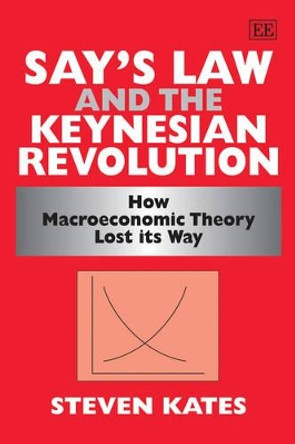
The volume provides a robust and innovative exposition of the crucial point of division between classical and Keynesian economics, demonstrating that the role of demand deficiency was the fundamental issue at stake. Steven Kates first discusses Keynes's interpretation of Say's Law before documenting its development within classical theory. He then charts the development of post-General Theory interpretations of Say's Law, challenging Keynes's definition which was captured in the phrase 'supply creates its own demand'. The author also attempts to unravel the vast literature on the progress made by Keynes between his Treatise on Money published in 1930 and the General Theory, published six years later. He suggests that the crucial point in the origins of the General Theory was Keynes's discovery of Malthus's writings on Say's Law at the very depths of the Great Depression in 1932.
This provocative book will be required reading for scholars and students interested in the history of economic thought, the history of macroeconomics and the Keynesian revolution.
About the Author
Steven Kates, Senior Fellow, Centre for Labour Market Research, University of Canberra, Australia
Reviews
'Say's Law and the Keynesian Revolution is a book par excellence. I have never encountered a text that explains the business cycle so cogently and provides a thorough repudiation of Keynesian economics to boot. It is a great contribution to economic literature.'
Book Information
ISBN 9781848448261
Author Steven Kates
Format Paperback
Page Count 264
Imprint Edward Elgar Publishing Ltd
Publisher Edward Elgar Publishing Ltd