


Description
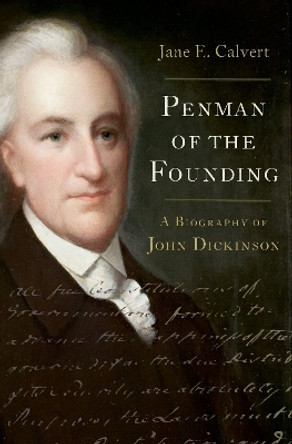
In the late-seventeenth century, Quakers originated a unique strain of constitutionalism, based on their theology and ecclesiology, which emphasized constitutional perpetuity and radical change through popular peaceful protest. While Whigs could imagine no other means of drastic constitutional reform except revolution, Quakers denied this as a legitimate option to governmental abuse of authority and advocated instead civil disobedience. This theory of a perpetual yet amendable constitution and its concomitant idea of popular sovereignty are things that most scholars believe did not exist until the American Founding. The most notable advocate of this theory was Founding Father John Dickinson, champion of American rights, but not revolution. His thought and action have been misunderstood until now, when they are placed within the Quaker tradition. This theory of Quaker constitutionalism can be traced in a clear and direct line from early Quakers through Dickinson to Martin Luther King, Jr.
This book traces the theory of Quaker constitutionalism from the early Quakers through Founding Father John Dickinson to Martin Luther King, Jr.
About the Author
Jane E. Calvert received her PhD from the University of Chicago in 2003 and is currently assistant professor of history at the University of Kentucky. Her articles and reviews have been published in History of Political Thought, Pennsylvania Magazine of History and Biography, History Compass, Annali di storia dell'esegesi, Quaker Religious Thought, Journal of Religion, Quaker History, and Pennsylvania History. She has also received fellowships and grants from the University of Chicago (1996-99, 1999, 2001, 2002); Haverford College (2000); the Library Company of Philadelphia/Historical Society of Pennsylvania (2002); the Newberry Library (2005); the National Endowment for the Humanities (2005); the American Philosophical Society (2006); the Huntington Library (2006); Association for Documentary Editing (2006); and the David Library of the American Revolution (2007).
Reviews
"In exploring Dickinson, Quaker theology, Revolutionary political thought, and the relationships between them, Calvert has invited us into fresh territory, and she has done so with graceful style." -Emma Lapsansky-Werner, Journal of Law & Religion
"Jane E. Calvert's book is the culmination, to date, of that collective effort [to take Quakers seriously], the keystone in an arch of scholarly writings that opens the way to a thoughtful and stimulating reconsideration of Quakerism. ...This is a scholarly accomplishment of note and it will, I hope, generate some restating of revolutionary history." -Alan Tully, American Historical Review
"The volume is well organized, leading the reader progressively through sections on Quakerism in general..." -Stuart B. Jennings, Church History
"In a provocative monograph, historian Jane E. Calvert puts the Quakers and John Dickinson back into the story of America's constitutional founding and American political history writ large." -Kyle G. Yolk, Journal of the Early Republic
"Calvert's reassessment of John Dickinson's role in the revolutionary and founding era of the United States is so much more than another 'founding father' biography. It is instead one of the most thorough treatments of American Quakerism in general and Quaker politics and resistance in particular. ...[H]er book is essential reading to anyone interested in American reform in general, as well as the history of civil disobedience theories." -Beverly C. Tomek, Pennsylvania History
"In a clearly argued and well researched thesis, Professor Calvert contributes greatly to the discussion [of Quaker reform] by compiling a synthesis of previous research and her own unique findings. The conclusions, though clearly developed, are not without controversy, but any future discussion will have to address many of the issues she had clearly articulated and for that we can only be grateful." -Stuart B. Jennings, Church History
"In a provocative monograph, historian Jane E. Calvert puts the Quakers and John Dickinson back into the story of America's constitutional founding and American political history writ large. Challenging readers to shelve preconceptions of Quakers as apolitical quietists, Calvert convincingly shows Quakers of the seventeenth and eighteenth centuries pioneering a then unique tradition of constitutional thought and political action....[C]onstitutional and political historians should join scholars of Quakers and colonial and revolutionary Pennsylvania in wrestling with Calvert's bold claims about the Quaker influence on American popular sovereignty." -Kyle G. Volk, Journal of the Early Republic
"Jane E. Calvert's study is narrow and deep, showing the relationship between religion and politics within an examination of Pennsylvania Quakers and their intellectual influence on Founder John Dickinson." -Ellen Holmes Pearson, William and Mary Quarterly
Book Information
ISBN 9780521884365
Author Jane E. Calvert
Format Hardback
Page Count 396
Imprint Cambridge University Press
Publisher Cambridge University Press
Weight(grams) 700g
Dimensions(mm) 240mm * 163mm * 30mm
This book traces the theory of Quaker constitutionalism from the early Quakers through Founding Father John Dickinson to Martin Luther King, Jr.
About the Author
Jane E. Calvert received her PhD from the University of Chicago in 2003 and is currently assistant professor of history at the University of Kentucky. Her articles and reviews have been published in History of Political Thought, Pennsylvania Magazine of History and Biography, History Compass, Annali di storia dell'esegesi, Quaker Religious Thought, Journal of Religion, Quaker History, and Pennsylvania History. She has also received fellowships and grants from the University of Chicago (1996-99, 1999, 2001, 2002); Haverford College (2000); the Library Company of Philadelphia/Historical Society of Pennsylvania (2002); the Newberry Library (2005); the National Endowment for the Humanities (2005); the American Philosophical Society (2006); the Huntington Library (2006); Association for Documentary Editing (2006); and the David Library of the American Revolution (2007).
Reviews
"In exploring Dickinson, Quaker theology, Revolutionary political thought, and the relationships between them, Calvert has invited us into fresh territory, and she has done so with graceful style." -Emma Lapsansky-Werner, Journal of Law & Religion
"Jane E. Calvert's book is the culmination, to date, of that collective effort [to take Quakers seriously], the keystone in an arch of scholarly writings that opens the way to a thoughtful and stimulating reconsideration of Quakerism. ...This is a scholarly accomplishment of note and it will, I hope, generate some restating of revolutionary history." -Alan Tully, American Historical Review
"The volume is well organized, leading the reader progressively through sections on Quakerism in general..." -Stuart B. Jennings, Church History
"In a provocative monograph, historian Jane E. Calvert puts the Quakers and John Dickinson back into the story of America's constitutional founding and American political history writ large." -Kyle G. Yolk, Journal of the Early Republic
"Calvert's reassessment of John Dickinson's role in the revolutionary and founding era of the United States is so much more than another 'founding father' biography. It is instead one of the most thorough treatments of American Quakerism in general and Quaker politics and resistance in particular. ...[H]er book is essential reading to anyone interested in American reform in general, as well as the history of civil disobedience theories." -Beverly C. Tomek, Pennsylvania History
"In a clearly argued and well researched thesis, Professor Calvert contributes greatly to the discussion [of Quaker reform] by compiling a synthesis of previous research and her own unique findings. The conclusions, though clearly developed, are not without controversy, but any future discussion will have to address many of the issues she had clearly articulated and for that we can only be grateful." -Stuart B. Jennings, Church History
"In a provocative monograph, historian Jane E. Calvert puts the Quakers and John Dickinson back into the story of America's constitutional founding and American political history writ large. Challenging readers to shelve preconceptions of Quakers as apolitical quietists, Calvert convincingly shows Quakers of the seventeenth and eighteenth centuries pioneering a then unique tradition of constitutional thought and political action....[C]onstitutional and political historians should join scholars of Quakers and colonial and revolutionary Pennsylvania in wrestling with Calvert's bold claims about the Quaker influence on American popular sovereignty." -Kyle G. Volk, Journal of the Early Republic
"Jane E. Calvert's study is narrow and deep, showing the relationship between religion and politics within an examination of Pennsylvania Quakers and their intellectual influence on Founder John Dickinson." -Ellen Holmes Pearson, William and Mary Quarterly
Book Information
ISBN 9780521884365
Author Jane E. Calvert
Format Hardback
Page Count 396
Imprint Cambridge University Press
Publisher Cambridge University Press
Weight(grams) 700g
Dimensions(mm) 240mm * 163mm * 30mm