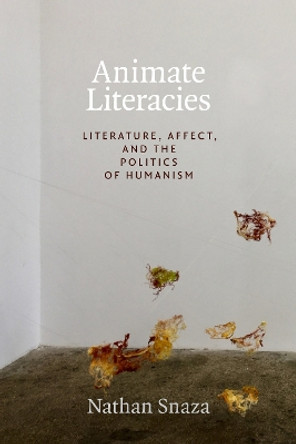


Description
Focusing on the interdependence between human, animal, and machine, posthumanism redefines the meaning of the human being previously assumed in knowledge production. This movement challenges some of the most foundational concepts in educational theory and has implications within educational research, curriculum design and pedagogical interactions. In this volume, a group of international contributors use posthumanist theory to present new modes of institutional collaboration and pedagogical practice. They position posthumanism as a comprehensive theoretical project with connections to philosophy, animal studies, environmentalism, feminism, biology, queer theory and cognition. Researchers and scholars in curriculum studies and philosophy of education will benefit from the new research agendas presented by posthumanism.
About the Author
Nathan Snaza is Director of the Bridge to Success Program and member of the English Department at the University of Richmond, USA. His writings have appeared in journals such as Journal of Curriculum and Pedagogy, Angelaki, Educational Researcher and Journal of Critical Animal Studies. John A. Weaver is Professor of Curriculum Studies at Georgia Southern University, USA. He is the author of Educating the Posthuman (2010), Popular Culture: A Primer (2004/8), Rethinking Academic Politics in Germany and The United States (2000) and editor of four other books including (Post) Modern Science (Education) (2001). He is the author of 30 journal articles and book chapters.
Reviews
" What is evident by the end of the book is that posthumanism is a philosophical and interllectual form of inquiry - and Weaver challenges the broad field of education to release itself not only from the constraining forces of humanism, but also what Snaza and Weaver called in their introduction methodocentrism. Weaver is boldly stating that education and educational inquiry needs to become more interllectual; posthumanist philosophy and inquiry is one rhizomatic pathway that may unleash possibilities long since forgotten, reminding us of the interconnected nature of humans, animals, objects, and forces within educational inquiry."
- Paul William Eaton, The Review of Higher Education, Spring 2016
"In summary, this volume is a valuable contribution both to furthering the discussion on how post-humanism can help change educational theory and practice."
- Stefan Herbrechter Coventry University, UK, Educational Philosophy and Theory, 2016
Book Information
ISBN 9781138782358
Author Nathan Snaza
Format Hardback
Page Count 218
Imprint Routledge
Publisher Taylor & Francis Ltd
Weight(grams) 385g