

Description
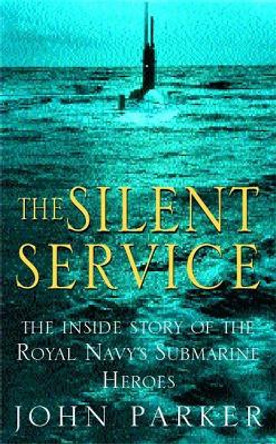
The atom bombs dropped on Japan at the end of the Second World War opened the door to the nuclear age. Seeing the potential for developing nuclear energy for the US Navy, Capt. Hyman Rickover initiated a research programme that culminated in the launch of USS Nautilus, the world's first nuclear-powered submarine. Meanwhile, ballistic missile technology was developing fast, but still relied on complex liquid fuels. The US Navy partnered with the army to develop a ballistic missile for both services, but withdrew when solid fuels became a practical proposition. Under the leadership of RADM William Raborn, the US Navy set up its own project: the Polaris weapon system. In 1960, the first missile-armed nuclear-powered submarine (SSBN) left on patrol, with forty more to follow in subsequent years. Two years later, when Britain's Blue Streak and Skybolt plans were cancelled, Harold Macmillan and John F. Kennedy agreed for Polaris to be supplied to the Royal Navy.
About the Author
John Boyes was born in Edinburgh in 1947. Educated at Rugby School, he qualified as a chartered accountant in 1972 and thereafter pursued a career in the motor industry until his retirement in 2005. He has had a lifelong interest in the history of missiles and published his first book on the topic, Project Emily: Thor IRBM and the RAF, in 2008. He is the treasurer of the Royal Air Force Historical Society and financial controller of the Bomber Command Association, responsible for the financial management of its memorial in London.
Book Information
ISBN 9781781559314
Author John Boyes
Format Hardback
Page Count 384
Imprint Fonthill Media Ltd
Publisher Fonthill Media Ltd
Weight(grams) 730g
Dimensions(mm) 234mm * 156mm * 34mm
About the Author
John Boyes was born in Edinburgh in 1947. Educated at Rugby School, he qualified as a chartered accountant in 1972 and thereafter pursued a career in the motor industry until his retirement in 2005. He has had a lifelong interest in the history of missiles and published his first book on the topic, Project Emily: Thor IRBM and the RAF, in 2008. He is the treasurer of the Royal Air Force Historical Society and financial controller of the Bomber Command Association, responsible for the financial management of its memorial in London.
Book Information
ISBN 9781781559314
Author John Boyes
Format Hardback
Page Count 384
Imprint Fonthill Media Ltd
Publisher Fonthill Media Ltd
Weight(grams) 730g
Dimensions(mm) 234mm * 156mm * 34mm