

Description
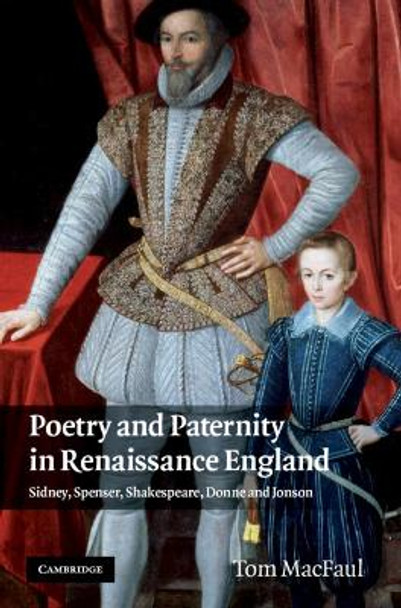
Becoming a father was the main way that an individual in the English Renaissance could be treated as a full member of the community. Yet patriarchal identity was by no means as secure as is often assumed: when poets invoke the idea of paternity in love poetry and other forms, they are therefore invoking all the anxieties that a culture with contradictory notions of sexuality imposed. This study takes these anxieties seriously, arguing that writers such as Sidney and Spenser deployed images of childbirth to harmonize public and private spheres, to develop a full sense of selfhood in their verse, and even to come to new accommodations between the sexes. Shakespeare, Donne and Jonson, in turn, saw the appeal of the older poets' aims, but resisted their more radical implications. The result is a fiercely personal yet publicly-committed poetry that wouldn't be seen again until the time of the Romantics.
This book explores the notion of paternity in early modern poetry, providing close readings of the major works of the time.
About the Author
Tom MacFaul is Lecturer in English at Merton College, University of Oxford. He is the author of Male Friendship in Shakespeare and his Contemporaries (Cambridge, 2007) and many articles on Renaissance poetry and drama.
Reviews
Review of the hardback: 'Enlightening.' The Times Literary Supplement
'MacFaul's argument is neat and controlled.' Notes and Queries
Book Information
ISBN 9780521191104
Author Tom MacFaul
Format Hardback
Page Count 288
Imprint Cambridge University Press
Publisher Cambridge University Press
Weight(grams) 600g
Dimensions(mm) 235mm * 162mm * 19mm
This book explores the notion of paternity in early modern poetry, providing close readings of the major works of the time.
About the Author
Tom MacFaul is Lecturer in English at Merton College, University of Oxford. He is the author of Male Friendship in Shakespeare and his Contemporaries (Cambridge, 2007) and many articles on Renaissance poetry and drama.
Reviews
Review of the hardback: 'Enlightening.' The Times Literary Supplement
'MacFaul's argument is neat and controlled.' Notes and Queries
Book Information
ISBN 9780521191104
Author Tom MacFaul
Format Hardback
Page Count 288
Imprint Cambridge University Press
Publisher Cambridge University Press
Weight(grams) 600g
Dimensions(mm) 235mm * 162mm * 19mm