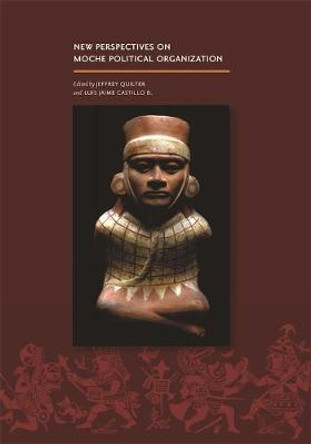


Description
The Inka Empire stretched over much of the length and breadth of the South American Andes, encompassed elaborately planned cities linked by a complex network of roads and messengers, and created astonishing works of architecture and artistry and a compelling mythology-all without the aid of a graphic writing system. Instead, the Inkas' records consisted of devices made of knotted and dyed strings-called khipu-on which they recorded information pertaining to the organization and history of their empire. Despite more than a century of research on these remarkable devices, the khipu remain largely undeciphered.
In this benchmark book, twelve international scholars tackle the most vexed question in khipu studies: how did the Inkas record and transmit narrative records by means of knotted strings? The authors approach the problem from a variety of angles. Several essays mine Spanish colonial sources for details about the kinds of narrative encoded in the khipu. Others look at the uses to which khipu were put before and after the Conquest, as well as their current use in some contemporary Andean communities. Still others analyze the formal characteristics of khipu and seek to explain how they encode various kinds of numerical and narrative data.
"A veritable encyclopedia of the khipu, this volume pulls together new and groundbreaking work by the foremost experts, attacking the problem from a wide variety of perspectives and integrating analysis from historical, archaeological, and ethnographic perspectives." -- Thomas A. Abercrombie, Associate Professor of Anthropology, New York University
About the Author
Jeffrey Quilter is Director of Pre-Columbian Studies at Dumbarton Oaks in Washington, D.C. Gary Urton is the Dumbarton Oaks Professor of Pre-Columbian Studies, Harvard University, as well as a MacArthur Fellow (2001-2005).
Book Information
ISBN 9780292723672
Author Jeffrey Quilter
Format Paperback
Page Count 391
Imprint University of Texas Press
Publisher University of Texas Press
Weight(grams) 454g