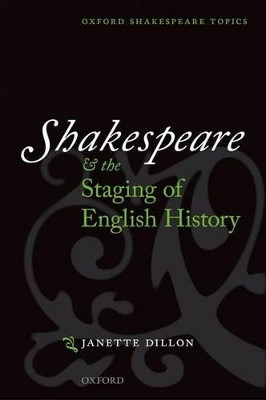


Description
This study explores the use of other languages, especially Latin, in medieval and Renaissance English drama. Until the medieval period Latin was regarded as the sacramental language of authority, but in the newly politicized linguistic arena of the late fourteenth century it became a symbol of the potential enemy from Rome. In this book Janette Dillon examines why, during the period 1400 to 1600, other languages increasingly invade English plays, and how their significance is illuminated by developments in Church and state, in particular the advancing Reformation and expanding English nationalism. In marked contrast to other related studies, Dillon focuses on drama as performance and employs a wide range of works, from the mystery cycles to The Spanish Tragedy, and finally Shakespeare.
This study explores the use of other languages, especially Latin, in medieval and Renaissance English drama.
Reviews
'In addressing the appearance of 'other languages' in early English drama Janette Dillon produces a study of considerable range and depth ... author's insistence on focusing on language's political and dramatic force has helped to make this a scholarly and readable book which not only informs us in historical and literary terms about its period, but also equips us to 'hear' language as staged event.' New Theatre Quarterly
Book Information
ISBN 9780521032155
Author Janette Dillon
Format Paperback
Page Count 292
Imprint Cambridge University Press
Publisher Cambridge University Press
Weight(grams) 436g
Dimensions(mm) 228mm * 151mm * 16mm
This study explores the use of other languages, especially Latin, in medieval and Renaissance English drama.
Reviews
'In addressing the appearance of 'other languages' in early English drama Janette Dillon produces a study of considerable range and depth ... author's insistence on focusing on language's political and dramatic force has helped to make this a scholarly and readable book which not only informs us in historical and literary terms about its period, but also equips us to 'hear' language as staged event.' New Theatre Quarterly
Book Information
ISBN 9780521032155
Author Janette Dillon
Format Paperback
Page Count 292
Imprint Cambridge University Press
Publisher Cambridge University Press
Weight(grams) 436g
Dimensions(mm) 228mm * 151mm * 16mm