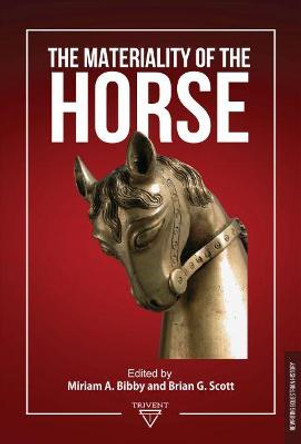


Description
The outstanding qualities of the Galloway horse landrace are referenced in literary sources from the late sixteenth century onwards. Brief, but eloquent and revealing allusions appear in the work of William Shakespeare, Thomas Dekker, Ben Jonson, and other writers with connections to the Tudor, Stuart, Caroline, and Carolean courts. The Galloway nag was sufficiently influential for its name to become a generic widely applied to small horses of a certain type: speedy, enduring, and reliable. This is still the case in the north of England and Australia, where the terms "Gallowa" and "Galloway" continue to be used today. The Galloway contributed to a surprising number of modern horse breeds, including the Thoroughbred, yet few people are aware of its influence. Miriam A. Bibby shows how and why its contribution has been overwritten by other narratives. In doing so, she also reveals previously unexplored sources that indicate the complex role played by the imagined Galloway in Anglo-Scottish relations. Collectively these represent a unique new genre of commentary that she identifies as "Galloway Nag Satire." This is the first major study devoted to the history of the Galloway horse.
About the Author
Miriam A. Bibby is an equine historian, author, and editor. She is co-editor-in-chief of Cheiron, the International Journal of Equine and Equestrian History and an affiliate of the University of Glasgow's School of Interdisciplinary Studies. Miriam is a former course developer for the University of Manchester's networked learning course in Egyptology and has worked for several museums and heritage organisations. Research curiosity about the relatively unknown Galloway horse, or nag, led to a PhD on the topic. Miriam has kept horses throughout her adult life, including Fell ponies, one of the breeds believed to be the closest relatives of the Galloway horse.
Book Information
ISBN 9786156696144
Author Miriam A. Bibby
Format Hardback
Page Count 560
Imprint Trivent Medieval
Publisher Trivent Publishing
Weight(grams) 272g
About the Author
Miriam A. Bibby is an equine historian, author, and editor. She is co-editor-in-chief of Cheiron, the International Journal of Equine and Equestrian History and an affiliate of the University of Glasgow's School of Interdisciplinary Studies. Miriam is a former course developer for the University of Manchester's networked learning course in Egyptology and has worked for several museums and heritage organisations. Research curiosity about the relatively unknown Galloway horse, or nag, led to a PhD on the topic. Miriam has kept horses throughout her adult life, including Fell ponies, one of the breeds believed to be the closest relatives of the Galloway horse.
Book Information
ISBN 9786156696144
Author Miriam A. Bibby
Format Hardback
Page Count 560
Imprint Trivent Medieval
Publisher Trivent Publishing
Weight(grams) 272g