

Description
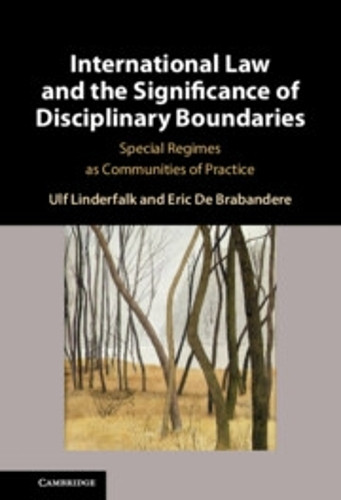
Over the last thirty or so years, international law and legal practice have become increasingly more specialized and diversified. These developments come with an increasingly divergent legal practice, in what has been coined as 'special regimes'. This book proposes a new understanding of the concept of a special regime to explain why specialists in different fields of international law do similar things differently. It argues that special regimes are best conceived as communities of practice, in the sense of Etienne Wenger's theory of communities of practice. It explores how the theory of communities of practice translates to the context of international law and the concept of a special regime. The authors draw up an innovative methodology to investigate their theory, focused on the conduct of community members, and apply this method to selected case studies, offering an original approach to the understanding of the special regimes in international law.
Explores how the theory of communities of practice can explain special regimes and create a common ground between them.
About the Author
Ulf Linderfalk is Professor of International Law at Lund University. He is a 'specialized generalist'. His research has examined issues such as normative conflict, legal hierarchy, legal interpretation, intertemporal law, legal principles, legal concepts, good faith, abuse of rights, proportionality, and the international legal system as such. Eric De Brabandere is Professor of International Dispute Settlement and Director of the Grotius Centre for International Legal Studies at Leiden University's Law School. He also practises in international law and (investment) arbitration (as partner with DMDB Law in Brussels).
Book Information
ISBN 9781009543200
Author Ulf Linderfalk
Format Hardback
Page Count 220
Imprint Cambridge University Press
Publisher Cambridge University Press
Explores how the theory of communities of practice can explain special regimes and create a common ground between them.
About the Author
Ulf Linderfalk is Professor of International Law at Lund University. He is a 'specialized generalist'. His research has examined issues such as normative conflict, legal hierarchy, legal interpretation, intertemporal law, legal principles, legal concepts, good faith, abuse of rights, proportionality, and the international legal system as such. Eric De Brabandere is Professor of International Dispute Settlement and Director of the Grotius Centre for International Legal Studies at Leiden University's Law School. He also practises in international law and (investment) arbitration (as partner with DMDB Law in Brussels).
Book Information
ISBN 9781009543200
Author Ulf Linderfalk
Format Hardback
Page Count 220
Imprint Cambridge University Press
Publisher Cambridge University Press