

Description
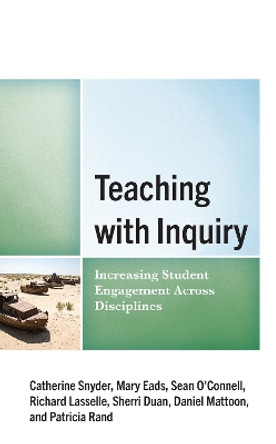
This research-based book dissects and explores the meaning and nature of Inquiry in teaching and learning in schools, challenging existing concepts and practices. In particular, it explores and contests prevailing attitudes about the practice of inquiry-based learning across the Science, Geography and History disciplines, as well as focusing on the importance of the role of teacher in what is frequently criticised as being a student-controlled activity.
Three frameworks, which are argued to be necessarily intertwined for discipline-specific literacy, guide this inquiry work: the classroom goals; the instructional approach; and the degree of teacher direction. The foundation of the analysis is the notion of educational inquiry as it is structured in the Australian Curriculum, along with the locating of the study in international trends in inquiry learning over time. It will be of great interest to researchers, higher degree students and practicing professionals working in Education and Sociology.
"Offers a sequential and profound overview of the subject 'inquiry in education'. The chapters in part two take the reader through a carefully structured approach to the essential aspects of inquiry-based practices, and makes suggestions as to the foundations of, and differences between inquiry-based Teaching and Learning in Science, Geography, and History education. This is a book that researchers, academics and those interested Science, Geography, and History teacher education should read - not only in Australia but internationally." (Daniela Schmeinck, Professor of Science Education and Social Sciences, University of Cologne, Germany) "Written using examples from the Australian context, the book extends the discussion of inquiry as contextualised by the disciplinary influences in science, geography and history for an international audience. The authors provide the reader with a journey into understanding how inquiry based learning (IBL) can be initiated and conducted. In particular I found the chapters on using data as evidence for inquiry and the need to evaluate inquiry as important contribution to the discourses on IBL. The final chapter on conducting inquiry in the field adds a feather in the cap for the book as it brings to mind the nature of inquiry in subject disciplines like geography, where the real world context often help students develop deeper understanding. I would urge teacher educators to consider this as required reading for the topic of IBL, regardless of whether the curriculum subject to be taught is in science, geography, or history." (Chew-Hung Chang, Associate Professor with the Humanities and Social Studies Education Academic Group, National Institute of Education, Nanyang Technological University, Singapore) "A timely book. With STEM, being a confusing current buzzword for education, this book reminds us of Inquiry, a more abiding feature in which teaching and learning becomes an active cooperative process. It discusses the contextual nature of the process by comparing its role in Science, Geography and History, as well as opening up the important issue of inquiry's cultural dependence." (Emeritus Professor Peter Fensham AM, Monash University, Australia)
About the Author
Gillian Kidman is Associate Professor in Science Education, Faculty of Education, Monash University, Australia. Niranjan Casinader is Senior Lecturer in Curriculum and Assessment, Faculty of Education, Monash University, Australia.
Reviews
"This valuable book by two education academics from Monash University, with wide experience in Science, History and Geography, examines the nature of inquiry teaching and learning across the three disciplines. ... This book is a valuable addition to the literature on inquiry learning and geography education while probably being too technical for most teachers." (Bill Stringer, Geographical Education, Vol. 31, 2018)
Book Information
ISBN 9781137534620
Author Gillian Kidman
Format Hardback
Page Count 159
Imprint Palgrave Pivot
Publisher Palgrave Macmillan
Three frameworks, which are argued to be necessarily intertwined for discipline-specific literacy, guide this inquiry work: the classroom goals; the instructional approach; and the degree of teacher direction. The foundation of the analysis is the notion of educational inquiry as it is structured in the Australian Curriculum, along with the locating of the study in international trends in inquiry learning over time. It will be of great interest to researchers, higher degree students and practicing professionals working in Education and Sociology.
"Offers a sequential and profound overview of the subject 'inquiry in education'. The chapters in part two take the reader through a carefully structured approach to the essential aspects of inquiry-based practices, and makes suggestions as to the foundations of, and differences between inquiry-based Teaching and Learning in Science, Geography, and History education. This is a book that researchers, academics and those interested Science, Geography, and History teacher education should read - not only in Australia but internationally." (Daniela Schmeinck, Professor of Science Education and Social Sciences, University of Cologne, Germany) "Written using examples from the Australian context, the book extends the discussion of inquiry as contextualised by the disciplinary influences in science, geography and history for an international audience. The authors provide the reader with a journey into understanding how inquiry based learning (IBL) can be initiated and conducted. In particular I found the chapters on using data as evidence for inquiry and the need to evaluate inquiry as important contribution to the discourses on IBL. The final chapter on conducting inquiry in the field adds a feather in the cap for the book as it brings to mind the nature of inquiry in subject disciplines like geography, where the real world context often help students develop deeper understanding. I would urge teacher educators to consider this as required reading for the topic of IBL, regardless of whether the curriculum subject to be taught is in science, geography, or history." (Chew-Hung Chang, Associate Professor with the Humanities and Social Studies Education Academic Group, National Institute of Education, Nanyang Technological University, Singapore) "A timely book. With STEM, being a confusing current buzzword for education, this book reminds us of Inquiry, a more abiding feature in which teaching and learning becomes an active cooperative process. It discusses the contextual nature of the process by comparing its role in Science, Geography and History, as well as opening up the important issue of inquiry's cultural dependence." (Emeritus Professor Peter Fensham AM, Monash University, Australia)
About the Author
Gillian Kidman is Associate Professor in Science Education, Faculty of Education, Monash University, Australia. Niranjan Casinader is Senior Lecturer in Curriculum and Assessment, Faculty of Education, Monash University, Australia.
Reviews
"This valuable book by two education academics from Monash University, with wide experience in Science, History and Geography, examines the nature of inquiry teaching and learning across the three disciplines. ... This book is a valuable addition to the literature on inquiry learning and geography education while probably being too technical for most teachers." (Bill Stringer, Geographical Education, Vol. 31, 2018)
Book Information
ISBN 9781137534620
Author Gillian Kidman
Format Hardback
Page Count 159
Imprint Palgrave Pivot
Publisher Palgrave Macmillan