


Description
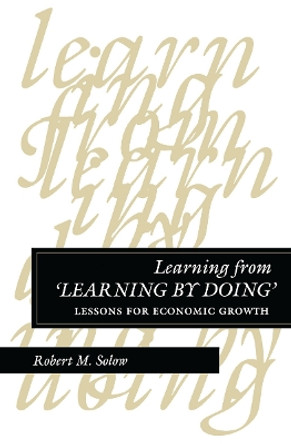
In the preface to the first edition of Growth Theory (copyright 1970), the author writes: "I have tried to give some feeling for the scope of aggregate theory of growth, a notion of technical details, and some idea of the directions in which future research is likely to go. About four years ago, the OUP NY economics editor suggested to Professor Solow that he bring this book up to date, because of the large amount of recent literature, often referred to as the "new growth theory," or more technically as "endogenous growth theory". This second edition of Growth Theory, which grew out of that conversation, begins with the author's Nobel Prize Lecture "Growth Theory and After" (1987) followed by the original six chapters of the first edition. The first edition appeared in 1970; the author maintains that basic growth theory is still best summarized in these chapters, using what is often classified as "exogenous growth theory." In the 70s, which happened to coincide witha worldwide productivity slowdown, very little new work occurred in growth theory. It wasn't until the 1980s that a surge of new writing appeared, with the work of Roemer, Lucas, and others, what the author refers to as "an astonishing burst of theoretical and empirical research that still continues." The author developed "a second half" of the book for this edition, six entirely new chpaters in which he discusses new growth theory (endogenous growth theory) and its relationship to exogenous theory. As a "bridge" between the two sets of chapters, he has written an essay entitled "Intermezzo" in which he discusses the relatively inactive period for growth theory in the 70s, before introducing the "new" endogenous theory of growth and contrasting it with earlier work. Solow is quick to agree that older growth theory can aptly be described as "exogenous," because the growth rate itself was left unexplained, or rather was considered a "given" (basically a result of the actual rate of labor-augmenting technology). But treating the growth rate as exogenous does not make it a permanent constant or inexplicable. Certainly things can be said about a variety of (exogenous) factors affecting the growth rate; nevertheless the "old" theory did not provide, or try to give, a systematic theory of the growth rate. To sum up, according to the author, the way to understand exogenous growth theory is to show how aggregate output adjusts to the rate of population growth and the rate of technological process, whatever they happen to be and for however long the persist (treated in Chapters 1-6 and the "Intermezzo"). By contrast, the main contribution of the (new) endogenous grotwh theory is to propose a systematic theory of technological progress, a model that actually explains the rate of growth. It is the contention of the author that no theory of innovation or growth can come up with a formulaic way to arrive at a growth rate. For that reason he believes there is something arbitrary introduced into all endogenous theories of the rate of growth. They claim to explain more than they can be expected to do. Rather than trying to pin down determinants of any "steady-state" growth rate, exogenous growth theory describes trends and policies that increase growth, including the growth rate. For reasons made explicit in the book, the author deals with "AK"theory, convergence, and international cross-section studies, with only the passing attention he believes they deserve. In the "second half of the book," starting in Chapter 7, the author recasts the older (exogenous) model (Chapters 1-6) so that it can be more easily compared with new models. Chapters 8-11 takes a close analytical look at hte key models: Lucas (8); Roemer (9); Grossman/Helpman (10); Aghion and Howitt (11). In each chapter he shows how an unwarranted assumption creeps into these models that try to determin growth rate endogenously. The final chapter looks at lessons from the new growth theory and suggests where gaps may usefully be filled in future research. Despite his criticisms of the new growth theory, the author is quik to acknowledge outstanding contributions made by the new generation of theorists. This is an important book that will be required reading in graduate programs in macroeconomics as well as specific courses on growth theory, at both the undergraduate and graduate levels. No other book provides such a broad overviwe of the whole field and its evolution to the present.
Book Information
ISBN 9780195109030
Author Robert M. Solow
Format Paperback
Page Count 220
Imprint Oxford University Press Inc
Publisher Oxford University Press Inc
Weight(grams) 277g
Dimensions(mm) 210mm * 141mm * 16mm
Book Information
ISBN 9780195109030
Author Robert M. Solow
Format Paperback
Page Count 220
Imprint Oxford University Press Inc
Publisher Oxford University Press Inc
Weight(grams) 277g
Dimensions(mm) 210mm * 141mm * 16mm