


Description
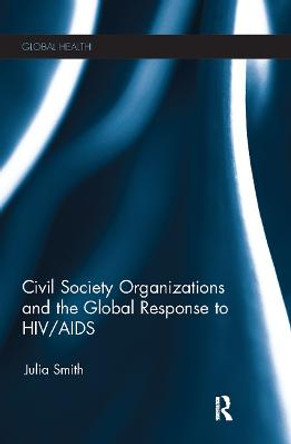
In the past decade the global financial assistance for AIDS responses increased tremendously and the donor community provided greater resources to community responses. Yet little is known about the global magnitude of these resources and their allocation among HIV and AIDS activities and services. To address this knowledge gap, this report pulls together evidence from several different sources (donor data bases, surveys of civil society organisations, country funding profiles) to determine, among other things, how funds are reaching civil society and community-based organisations, how these funds are being used, and the degree to which these organisations rely on other sources of funding. The analysis suggests that funding flows have increased dramatically for civil society organisations (CSOs), reaching at least $690 million per year on average during the period 2003 - 2009. However, much smaller funding is reaching organisations at local level.
The report documents the impact achieved by this funding. Traditionally, civil society organisations have been perceived at times to be providers of humanitarian aid, innovators in implementing responses adapted to local needs, or inefficient actors diverting public funds from more effective uses. The report argues that current evidence shows that community responses play a useful complementary role to national AIDS programs that has been achieved with relatively little funding. Contrary to a widespread view, the report highlights that community responses add resources to national programs. In Kenya, Nigeria and Zimbabwe, substantial mobilisation of resources in the form of volunteers are mobilised by communities. There is a strong risk that in the current environment of increased resource scarcity, prevention programs implemented by civil society organisations would be cut unless there is strong evidence of value for money being generated. Community-based organisations are ill equipped to answer that question, but there is scope for improving the results that they generate.
The report argues that improving coordination with national programs, strengthening consistency between local activities and HIV epidemics, building stronger network of civil society organisations, and mobilising sustainable funding are the most important ways for community responses to move forward and address the challenges faced by community responses.
Book Information
ISBN 9780821397794
Author Rene Bonnel
Format Paperback
Page Count 112
Imprint World Bank Publications
Publisher World Bank Publications
Weight(grams) 333g
Dimensions(mm) 254mm * 178mm * 6mm
The report documents the impact achieved by this funding. Traditionally, civil society organisations have been perceived at times to be providers of humanitarian aid, innovators in implementing responses adapted to local needs, or inefficient actors diverting public funds from more effective uses. The report argues that current evidence shows that community responses play a useful complementary role to national AIDS programs that has been achieved with relatively little funding. Contrary to a widespread view, the report highlights that community responses add resources to national programs. In Kenya, Nigeria and Zimbabwe, substantial mobilisation of resources in the form of volunteers are mobilised by communities. There is a strong risk that in the current environment of increased resource scarcity, prevention programs implemented by civil society organisations would be cut unless there is strong evidence of value for money being generated. Community-based organisations are ill equipped to answer that question, but there is scope for improving the results that they generate.
The report argues that improving coordination with national programs, strengthening consistency between local activities and HIV epidemics, building stronger network of civil society organisations, and mobilising sustainable funding are the most important ways for community responses to move forward and address the challenges faced by community responses.
Book Information
ISBN 9780821397794
Author Rene Bonnel
Format Paperback
Page Count 112
Imprint World Bank Publications
Publisher World Bank Publications
Weight(grams) 333g
Dimensions(mm) 254mm * 178mm * 6mm