

Description
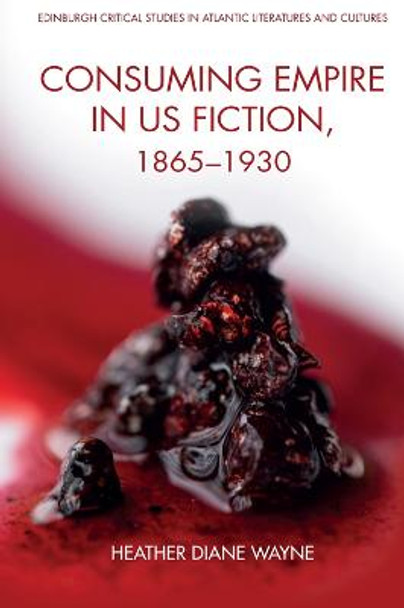
What is a reference to an Italian Egyptologist doing in Louisa May Alcott's portrait of domesticity Little Women? Why does Elizabeth Stuart Phelps's painter protagonist Avis Dobell know--and care--that her red shawl is dyed with desiccated beetles? Why might W.E.B. Du Bois's fictional sharecropper display a reproduction of a painting by William-Adolphe Bouguereau near his cotton field? These questions, and more, are answered by Consuming Empire in US Fiction, 1865-1930. An interdisciplinary study of references to internationally-traded commodities in US fiction, Consuming Empire in US Fiction, 1865-1930 assembles an integrated geopolitical analysis of Americans' material, gendered, and aesthetic experiences of empire at the turn of the twentieth century. Examining allusions to contested goods like cochineal, cotton, oranges, fur, gold, pearls, porcelain, and wheat, Consuming Empire in US Fiction, 1865-1930 reveals a linked global imagination among authors who were often directly or indirectly critical of US imperial ambitions. Furthermore, Consuming Empire in US Fiction, 1865-1930 considers the commodification of art itself, interpreting writers' allusions to paintings, sculptures, and artists as self-aware acknowledgments of their own complicity in global capitalism. As Consuming Empire in US Fiction, 1865-1930 demonstrates, literary texts have long trained consumers to imagine their relationship to the world through the things they own.
About the Author
Heather Wayne is a teacher of English and independent researcher living in Massachusetts. She earned her Ph.D. from the University of Massachusetts Amherst, and she has taught writing and literature courses at UMass Amherst and the University of Central Florida. Her research focuses on nineteenth-century US literature, material culture, feminism, visual culture, empire and global history.
Reviews
By examining the cultural lives of goods such as cotton, coal, fur (and others), Wayne's fascinating study reveals how American writers critiqued U.S. imperial ambitions in the decades after the Civil War. The book makes a significant contribution not only to American literary studies but also to strands of postcolonial and ecocritical scholarship devoted to cultures of extraction, resource narratives and exploitative histories. -- Sinead Moynihan, University of Exeter
Book Information
ISBN 9781399505710
Author Heather D Wayne
Format Hardback
Page Count 288
Imprint Edinburgh University Press
Publisher Edinburgh University Press
About the Author
Heather Wayne is a teacher of English and independent researcher living in Massachusetts. She earned her Ph.D. from the University of Massachusetts Amherst, and she has taught writing and literature courses at UMass Amherst and the University of Central Florida. Her research focuses on nineteenth-century US literature, material culture, feminism, visual culture, empire and global history.
Reviews
By examining the cultural lives of goods such as cotton, coal, fur (and others), Wayne's fascinating study reveals how American writers critiqued U.S. imperial ambitions in the decades after the Civil War. The book makes a significant contribution not only to American literary studies but also to strands of postcolonial and ecocritical scholarship devoted to cultures of extraction, resource narratives and exploitative histories. -- Sinead Moynihan, University of Exeter
Book Information
ISBN 9781399505710
Author Heather D Wayne
Format Hardback
Page Count 288
Imprint Edinburgh University Press
Publisher Edinburgh University Press