


Description
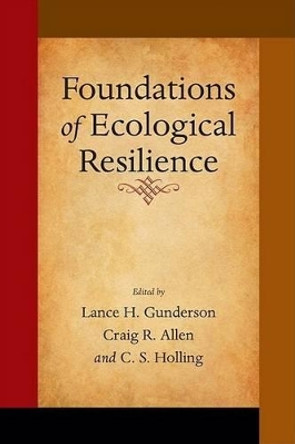
After a decades long economic slump, the city of Flint, Michigan, struggled to address chronic issues of toxic water supply, malnutrition, and food security gaps among its residents. A community engaged research project proposed a resilience assessment that would use panarchy theory to move the city toward a more sustainable food system. Flint is one of many examples that demonstrate how panarchy theory is being applied to understand and influence change in complex human natural systems. Applied Panarchy, the much anticipated successor to Lance Gunderson and C.S. Holling's seminal 2002 volume Panarchy, documents the extraordinary advances in interdisciplinary panarchy scholarship and applications over the past two decades. Panarchy theory has been applied to a broad range of fields from economics to law to urban planning, changing the practice of environmental stewardship for the better in measurable, tangible ways. Panarchy describes the way systems-whether forests, electrical grids, agriculture, coastal surges, public health, or human economies and governance-are part of even larger systems that interact in unpredictable ways. Although humans desire resiliency and stability in our lives to help us understand the world and survive, nothing in nature is permanently stable. How can society anticipate and adjust to the changes we see around us? Where Panarchy proposed a framework to understand how these transformational cycles work and how we might influence them, Applied Panarchy takes the scholarship to the next level, demonstrating how these concepts have been modified and refined. The book shows how panarchy theory intersects with other disciplines, and how it directly influences natural resources management and environmental stewardship. Intended as a text for graduate courses in environmental sciences and related fields, Applied Panarchy picks up where Panarchy left off, inspiring new generations of scholars, researchers, and professionals to put its ideas to work in practical ways.
About the Author
Lance Gunderson is professor and chair in the Department of Environmental Sciences at Emory University in Atlanta, Georgia. His research focuses on the human and institutional dimensions of resource ecology. He is coeditor-in-chief of the journal Ecology and Society. Craig Allen is a professor at the University of Nebraska in Lincoln, and serves on the board of directors for the Resilience Alliance. His research focuses on the links between land use and land cover change, biological invasions, extinctions, and resilience. Ahjond Garmestani is a research scientist with the U.S. Environmental Protection Agency, Office of Research and Development, Gulf Breeze, Florida, and the Utrecht Centre for Water, Oceans and Sustainability Law-Utrecht University School of Law, Utrecht, The Netherlands. His research is transdisciplinary and focuses on governance of social-ecological systems.
Book Information
ISBN 9781642830897
Author Lance H Gunderson
Format Paperback
Page Count 352
Imprint Island Press
Publisher Island Press
About the Author
Lance Gunderson is professor and chair in the Department of Environmental Sciences at Emory University in Atlanta, Georgia. His research focuses on the human and institutional dimensions of resource ecology. He is coeditor-in-chief of the journal Ecology and Society. Craig Allen is a professor at the University of Nebraska in Lincoln, and serves on the board of directors for the Resilience Alliance. His research focuses on the links between land use and land cover change, biological invasions, extinctions, and resilience. Ahjond Garmestani is a research scientist with the U.S. Environmental Protection Agency, Office of Research and Development, Gulf Breeze, Florida, and the Utrecht Centre for Water, Oceans and Sustainability Law-Utrecht University School of Law, Utrecht, The Netherlands. His research is transdisciplinary and focuses on governance of social-ecological systems.
Book Information
ISBN 9781642830897
Author Lance H Gunderson
Format Paperback
Page Count 352
Imprint Island Press
Publisher Island Press