

Description
For many years, Canadian cinema was dominated by the documentarytradition of the National Film Board, which tended to promote what filmscholar Jim Leach has called the "nationalist-realistproject"-films that privileged Canada's naturallandscape and sought to conjure a unified sense of Canadian identityfrom images of empty, untrammelled wilderness and bucolic farmlands.Over the past several decades, however, the hegemony of thisfundamentally colonial, Anglo-centric vision has been challenged byfrancophone and First Nations perspectives and by the growth of cities,where most Canadians now reside, as economic and technological centres.In opposition to the mythic "Canada" shaped through thelens of rural nostalgia, Canadian urban identity asserts itself aspolyphonic, diverse, constructed through multiple discourses andmediums, as an ongoing negotiation rather than a monolithicorientation. Taking the urban as setting and subject, filmmakers areideally poised to capture this multiplicity, creating their own,idiosyncratic portraits of the Canadian urban landscape and of thepeople who inhabit it.
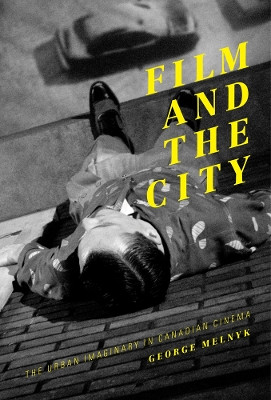
Examining fourteen Canadian films produced from the late 1980sonward, including Denys Arcand's Jesus de Montreal(1989), Mina Shum's Double Happiness (1994), and GuyMaddin's My Winnipeg (2007), Film and the Cityis the first comprehensive study of Canadian film and"urbanity"-the totality of urban culture and life asrefracted through the filmmaker's prism. Drawing on insights fromboth film and urban studies and building upon issues of identityformation long debated in Canadian studies, Melnyk considers howfilmmakers interpret and employ the spatiality, visuality, and oralityof urban space and how audiences read the films that result. In thisway, Film and the City argues that Canadian narrative film ofthe postmodern period has contributed to the articulation of a new,multifaceted understanding of national identity.
Film and the City puts forth a new paradigm for the consideration of Canadian identity in cinema. Contending that earlier models were dependent on a largely rural representation of the nation. Melnyk shows how recent urban films facilitate and showcase a new mode of identity formation and articulation ... Through examining specific films and filmmakers with an eye to their locality, and by folding them into a composite constellation that illustrates new ideas of Canadian identity, this text will surely provide a new marker for discussions of this evergreen topic. -- William Beard, University of Alberta
About the Author
George Melnyk is associate professor in theDepartment of Communication and Culture at the University of Calgary.He is the author of One Hundred Years of Canadian Cinema(2004), as well as the editor of The Young, the Restless, and theDead: Interviews with Canadian Filmmakers (2008) and, with BrendaAustin-Smith, of The Gendered Screen: Canadian WomenFilmmakers (2010).
Book Information
ISBN 9781927356593
Author George Melnyk
Format Paperback
Page Count 250
Imprint AU Press
Publisher AU Press
Weight(grams) 520g