

Description
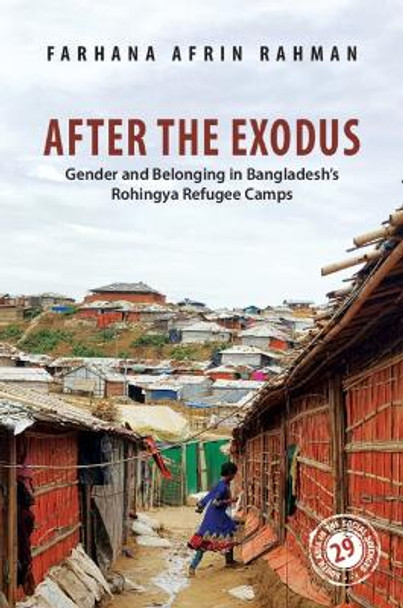
After the Exodus examines how forced migration of the Rohingya from Myanmar to Bangladesh has affected the gendered subjectivities and lived experiences of Rohingya refugee women, and transformed gender relations and roles in displacement. Based on 14 months of feminist ethnographic fieldwork in Bangladesh's Kutupalong-Balukhali refugee camp in 2017 and 2018, the book uncovers the everyday strategies employed by refugee women to create a sense of belonging and to make a life for themselves after forced migration. Rohingya women adapt to camp life by negotiating marriage and intimate experiences, adjusting to changing gender divisions of labour, and navigating encounters with humanitarian aid agencies and male camp leaders. These women strategically bargain shifting power relations to reconstruct their lives in displacement, thereby reclaiming agency and asserting their identity through the spaces they create, inhabit, and reshape; the coping mechanisms they employ; and the bonds of kinship and community they forge.
Examines how forced migration transforms the gendered subjectivities and everyday lived experiences of Rohingya refugee women in Bangladesh.
About the Author
Farhana Afrin Rahman is currently a Leverhulme Early Career Fellow and Isaac Newton Trust Fellow at the Department of Politics and International Studies, University of Cambridge, as well as a Junior Research Fellow at Wolfson College Cambridge. Her research interests include gender, refugees and forced migration, international development, lived experiences, and violence and conflict, amongst others.
Reviews
'After the Exodus is a refreshing addition to the literature of Rohingya camps in Bangladesh. The feminist lens that the book uses is very useful in casting light on the everyday lives of women. Through intense ethnographic details, life in the camps - the way that families regroup, new relationships formed, the problems with bringing up children in these cramped conditions, the issues surrounding marriage negotiations - are brought to life in vivid detail. The author has indeed successfully drawn us into the intricacies of negotiations that accompany these processes, as well as the fresh ways of problem solving that are brought into play.' Firdous Azim, Professor and Chair at the Department of English and Humanities at BRAC University, Dhaka
'This extraordinary monograph weaves the politics of storytelling in the context of acutely gendered violence and ethnic cleansing among Rohingya people with the futures they forge as they remake 'home' in the refugee camps of Bangladesh. Rahman's exquisite research has clearly earned the trust of her informants, and reveals the horrid death and sexual violence against the Rohingya by the Burmese military during what is often a forgotten humanitarian disaster of dispossession and genocide, but also the ways people are remaking home in a new place. This reflexive and original feminist ethnography grapples with the unspeakable crimes against humanity faced by the Rohingya, but goes well beyond their survival in the camps of Cox's Bazaar in Bangladesh, highlighting their presence, perseverance, and strength under conditions not of their own making.' Jennifer Hyndman, author of Managing Displacement: Refugees and the Politics of Humanitarianism (2000)
'This book provides a much-needed in-depth and poignant examination of the experiences of Rohingya women in the refugee camps of Bangladesh, exploring the complex interplay of gender identity, relations, and roles amid the harsh realities of forced displacement. Rahman restores women as resilient social agents navigating and negotiating patriarchal structures, rather than writing off their experiences as being those of victims unable to attend to their own wellbeing. Her unique approach instead emphasizes the resilience and creative strategies deployed by the Rohingya women to reconstruct their lives and communities, chief among them being the 'Majhee' system. This refreshing focus on the quotidian aspects of life in the camps provides an insightful and much-needed contribution to our understanding of refugee experiences more broadly and of refugee women specifically. Overall, a brilliantly researched and compelling book that offers a crucial perspective on the world's most marginalized individuals, making it a highly relevant and significant read.' Azeem Ibrahim OBE, author of The Rohingyas: Inside Myanmar's Hidden Genocide (2016)
Book Information
ISBN 9781009414821
Author Farhana Afrin Rahman
Format Hardback
Page Count 240
Imprint Cambridge University Press
Publisher Cambridge University Press
Examines how forced migration transforms the gendered subjectivities and everyday lived experiences of Rohingya refugee women in Bangladesh.
About the Author
Farhana Afrin Rahman is currently a Leverhulme Early Career Fellow and Isaac Newton Trust Fellow at the Department of Politics and International Studies, University of Cambridge, as well as a Junior Research Fellow at Wolfson College Cambridge. Her research interests include gender, refugees and forced migration, international development, lived experiences, and violence and conflict, amongst others.
Reviews
'After the Exodus is a refreshing addition to the literature of Rohingya camps in Bangladesh. The feminist lens that the book uses is very useful in casting light on the everyday lives of women. Through intense ethnographic details, life in the camps - the way that families regroup, new relationships formed, the problems with bringing up children in these cramped conditions, the issues surrounding marriage negotiations - are brought to life in vivid detail. The author has indeed successfully drawn us into the intricacies of negotiations that accompany these processes, as well as the fresh ways of problem solving that are brought into play.' Firdous Azim, Professor and Chair at the Department of English and Humanities at BRAC University, Dhaka
'This extraordinary monograph weaves the politics of storytelling in the context of acutely gendered violence and ethnic cleansing among Rohingya people with the futures they forge as they remake 'home' in the refugee camps of Bangladesh. Rahman's exquisite research has clearly earned the trust of her informants, and reveals the horrid death and sexual violence against the Rohingya by the Burmese military during what is often a forgotten humanitarian disaster of dispossession and genocide, but also the ways people are remaking home in a new place. This reflexive and original feminist ethnography grapples with the unspeakable crimes against humanity faced by the Rohingya, but goes well beyond their survival in the camps of Cox's Bazaar in Bangladesh, highlighting their presence, perseverance, and strength under conditions not of their own making.' Jennifer Hyndman, author of Managing Displacement: Refugees and the Politics of Humanitarianism (2000)
'This book provides a much-needed in-depth and poignant examination of the experiences of Rohingya women in the refugee camps of Bangladesh, exploring the complex interplay of gender identity, relations, and roles amid the harsh realities of forced displacement. Rahman restores women as resilient social agents navigating and negotiating patriarchal structures, rather than writing off their experiences as being those of victims unable to attend to their own wellbeing. Her unique approach instead emphasizes the resilience and creative strategies deployed by the Rohingya women to reconstruct their lives and communities, chief among them being the 'Majhee' system. This refreshing focus on the quotidian aspects of life in the camps provides an insightful and much-needed contribution to our understanding of refugee experiences more broadly and of refugee women specifically. Overall, a brilliantly researched and compelling book that offers a crucial perspective on the world's most marginalized individuals, making it a highly relevant and significant read.' Azeem Ibrahim OBE, author of The Rohingyas: Inside Myanmar's Hidden Genocide (2016)
Book Information
ISBN 9781009414821
Author Farhana Afrin Rahman
Format Hardback
Page Count 240
Imprint Cambridge University Press
Publisher Cambridge University Press